Watch On Demand
Back To All Articles

What Your Event Platform Isn't Telling You About Its AI Features

Most AI in event platforms speeds up individual tasks: session summaries, email copy, social clips. The workflow underneath stays the same, and fragmented data is why. An AI-naive platform should be able to help event teams do a lot more

In 2026, you can't walk 10 seconds without bumping into something AI. It's there when you open Linkedin. You see it in billboard signs (especially in SF) and when your phone has an update. Every tool you use has it, including event marketing platforms.

You've probably been in demos that show you AI session summaries, or email copy that can be whipped up in seconds, or tools that turn session recordings into clips for social media. They're all great and they save time. More or less.

What they don't do is change the workflow underneath it all. The guest list is still a spreadsheet. The lead export will still take two days. The context from the dinner conversation on Thursday night will still get lost by the time it makes it to the CRM.

But an AI-first platform can do much more than save a few minutes on individual tasks.

What counts as AI in event management today

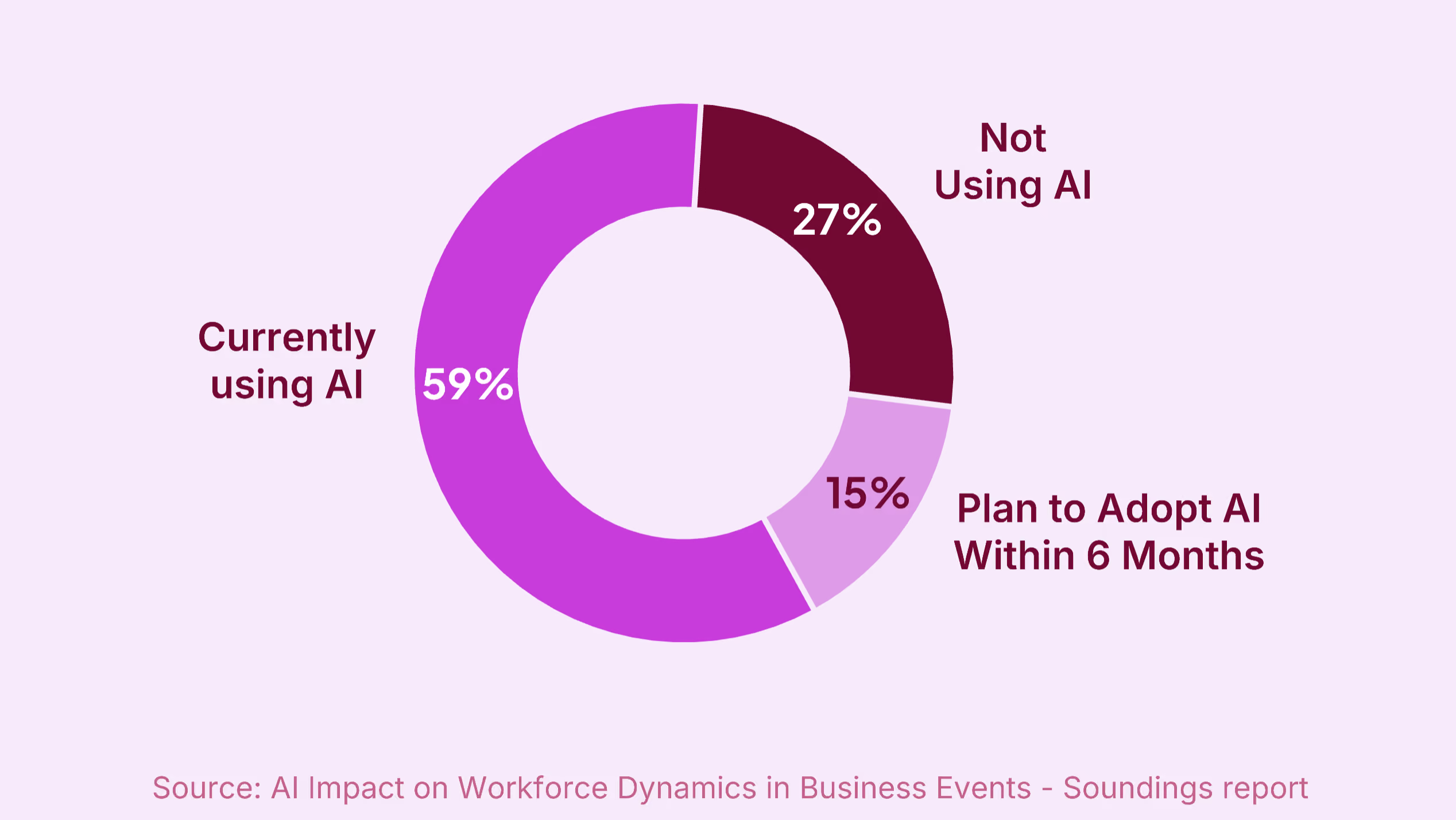
As per a 2025 PCMA survey, 59% of event teams already use AI, with the majority of them using it for content creation. Most AI in event platforms today shows up in individual features and they are useful in many ways.
A session description written in three seconds is better than spending twenty minutes on one, and a chatbot answering registration questions can reduce the volume of support tickets before an event.

The problem is that this stops at the feature layer. Most event platforms do not know what an attendee did at your last three events, or where they are in a buying conversation. When the model has no memory of the person, the output can't go beyond a superficial level. 

An Events Marketing Manager at a B2B software company says, "I think there are opportunities for AI personalization when it comes to our events, but we've only just skimmed the surface."

AI is only as powerful as the context you give it. And most event platforms have very little context to give.

Why fragmented data makes AI in event management worse

The average enterprise event program runs across more tools than the fingers on your hands. Almost two-thirds of marketers use more tools than two years ago. In the case of one field marketing team, their event platform was one of 12 tools they used.

Today event teams might work with separate systems for registration, webinars, field events, CRM, marketing automation, lead capture, content, analytics. Each tool does one job and holds one part of the whole information pie.

When the data is split that way, there might as well be no AI in your event platform. The attendee who came to your webinar in January and your roadshow in March looks identical to the AI as someone who just registered for the first time. The model cannot distinguish them, and you end up manually tweaking flows and assets every time.

This is the reason most event AI does not deliver at the scale it promises. When you have different codebases and databases that have no way to speak to each other, you get automation at most. And automation is not intelligence.

The pattern has been documented outside events too. When software teams started using AI coding assistants, individual developers wrote code significantly faster. But the time it actually took to ship finished software barely changed.

Faros studied over 10,000 developers and found that review queues got longer while company-level delivery metrics stayed flat. The bottleneck turned out to be everything else in the process.

AI in event marketing is in a similar state today. It might help you speed up one thing, but the pipe is still clogged with a spreadsheet waiting for approval, or a sales rep not following up on a good lead.

What agentic AI for events actually looks like

On the surface, a Zapier-like flow might feel great. For example, if an attendee checks in at the event, send a welcome SMS. If they visit the product demo booth, add them to the high-intent follow-up list. If the event ends and they were marked as "engaged," assign them to the nearest available rep in Salesforce.

But this is mechanical. Each step fires because that's what the flow dictates. The logic never changes regardless of who the attendee is or what else you know about them.

Agentic AI requires a foundation: a shared data layer across your brand and the events you hold. With that, the platform has enough context to act on. Combine that with some important guardrails, and the AI can now help you at the workflow level.

The guest list stops being a spreadsheet that bounces around in discussion threads. An event marketer can just describe what a good guest looks like in plain language, and the platform scores every name against that description, with live CRM data in every row. Approvals happen with deal stage and account context already visible.

A VP who used to spend 45 minutes switching between tabs to check each name now looks at a row, sees the context, and decides on nominations. The event marketer is no longer a Slack pinball.

Follow-up stops being the event marketer's job. When the event ends, the platform knows which reps were assigned leads and drafts the emails for them. It monitors whether they follow up, and if they haven't, it escalates.

Because the platform has context about your brand, you can generate on-brand assets almost immediately. When the session ends, clips and draft posts start generating.

Instead of building a post-event report by hand, the platform can show the event marketer drop-off trends, engagement by session, lead quality by event type with a conversational query. That's what an AI-first platform can do. 

AI should not be a separate feature. When it's built into the platform's foundation, you can get back to being an event marketer instead of a firefighter.

{{demo-widget-1}}

Subscribe to our blog

Book A Demo
Deliver your best event ever with Zuddl

Subscribe to our blog now!

Get fresh ideas, actionable insights and expert guidance for B2B events delivered directly to your inbox!

What Your Event Platform Isn't Telling You About Its AI Features

In 2026, you can't walk 10 seconds without bumping into something AI. It's there when you open Linkedin. You see it in billboard signs (especially in SF) and when your phone has an update. Every tool you use has it, including event marketing platforms.

You've probably been in demos that show you AI session summaries, or email copy that can be whipped up in seconds, or tools that turn session recordings into clips for social media. They're all great and they save time. More or less.

What they don't do is change the workflow underneath it all. The guest list is still a spreadsheet. The lead export will still take two days. The context from the dinner conversation on Thursday night will still get lost by the time it makes it to the CRM.

But an AI-first platform can do much more than save a few minutes on individual tasks.

What counts as AI in event management today

As per a 2025 PCMA survey, 59% of event teams already use AI, with the majority of them using it for content creation. Most AI in event platforms today shows up in individual features and they are useful in many ways.

A session description written in three seconds is better than spending twenty minutes on one, and a chatbot answering registration questions can reduce the volume of support tickets before an event.

The problem is that this stops at the feature layer. Most event platforms do not know what an attendee did at your last three events, or where they are in a buying conversation. When the model has no memory of the person, the output can't go beyond a superficial level. 

An Events Marketing Manager at a B2B software company says, "I think there are opportunities for AI personalization when it comes to our events, but we've only just skimmed the surface."

AI is only as powerful as the context you give it. And most event platforms have very little context to give.

Why fragmented data makes AI in event management worse

The average enterprise event program runs across more tools than the fingers on your hands. Almost two-thirds of marketers use more tools than two years ago. In the case of one field marketing team, their event platform was one of 12 tools they used.

Today event teams might work with separate systems for registration, webinars, field events, CRM, marketing automation, lead capture, content, analytics. Each tool does one job and holds one part of the whole information pie.

When the data is split that way, there might as well be no AI in your event platform. The attendee who came to your webinar in January and your roadshow in March looks identical to the AI as someone who just registered for the first time. The model cannot distinguish them, and you end up manually tweaking flows and assets every time.

This is the reason most event AI does not deliver at the scale it promises. When you have different codebases and databases that have no way to speak to each other, you get automation at most. And automation is not intelligence.

The pattern has been documented outside events too. When software teams started using AI coding assistants, individual developers wrote code significantly faster. But the time it actually took to ship finished software barely changed.

Faros studied over 10,000 developers and found that review queues got longer while company-level delivery metrics stayed flat. The bottleneck turned out to be everything else in the process.

AI in event marketing is in a similar state today. It might help you speed up one thing, but the pipe is still clogged with a spreadsheet waiting for approval, or a sales rep not following up on a good lead.

What agentic AI for events actually looks like

On the surface, a Zapier-like flow might feel great. For example, if an attendee checks in at the event, send a welcome SMS. If they visit the product demo booth, add them to the high-intent follow-up list. If the event ends and they were marked as "engaged," assign them to the nearest available rep in Salesforce.

But this is mechanical. Each step fires because that's what the flow dictates. The logic never changes regardless of who the attendee is or what else you know about them.

Agentic AI requires a foundation: a shared data layer across your brand and the events you hold. With that, the platform has enough context to act on. Combine that with some important guardrails, and the AI can now help you at the workflow level.

The guest list stops being a spreadsheet that bounces around in discussion threads. An event marketer can just describe what a good guest looks like in plain language, and the platform scores every name against that description, with live CRM data in every row. Approvals happen with deal stage and account context already visible.

A VP who used to spend 45 minutes switching between tabs to check each name now looks at a row, sees the context, and decides on nominations. The event marketer is no longer a Slack pinball.

Follow-up stops being the event marketer's job. When the event ends, the platform knows which reps were assigned leads and drafts the emails for them. It monitors whether they follow up, and if they haven't, it escalates.

Because the platform has context about your brand, you can generate on-brand assets almost immediately. When the session ends, clips and draft posts start generating.

Instead of building a post-event report by hand, the platform can show the event marketer drop-off trends, engagement by session, lead quality by event type with a conversational query. That's what an AI-first platform can do. 

AI should not be a separate feature. When it's built into the platform's foundation, you can get back to being an event marketer instead of a firefighter.

{{demo-widget-1}}

Subscribe to our blog

Book A Demo

Subscribe to our blog now!

Get fresh ideas, actionable insights and expert guidance for B2B events delivered directly to your inbox!

Our curated hub of inspiration

Take control of your virtual event production with Zuddl.
Own every step from registrations to approvals with Zuddl.
Own your event app from branding to CRM sync with Zuddl.
Book a Demo
Book A Demo
Book A Demo
Steph’s tip for event marketers: 
Bring a simple cost-savings table like this: 
Line Item
2024 Cost
2025 Cost(after negotiation)
Cost Savings
Venue package
$200k
$170k
$30k
Lead capture tech
$18k
$12k
$6k
Then say, “This $36K savings covers the increase I’m asking for.”