Watch On Demand
Back To All Articles

The Event Influence Signal Your CRM Can't See

Event influence is larger than data can show. What gets lost between the conversation on the event floor and the lead record the rep sees, and why does the 48-hour follow-up window close before most teams can act?

A Head of Events and Field Marketing at a fast-growing data reliability company described the moment her team finally closed a customer from an event dinner: "I literally had a celebration when we finally closed something. I have the proof that this business model not only starts and generates the opportunities, but goes all the way through."

The relief of finally having proof is a feeling every event marketer knows. There’s no question that events work. They're the only way to get people in a room and build trust and relationships face to face. A HockeyStack analysis showed that while events only receive credit for 6.5% of closed deals, event-sourced deals generally have higher ACVs and shorter sales cycles.

The proof that events work shouldn’t be hard to find.

The context problem in event marketing attribution

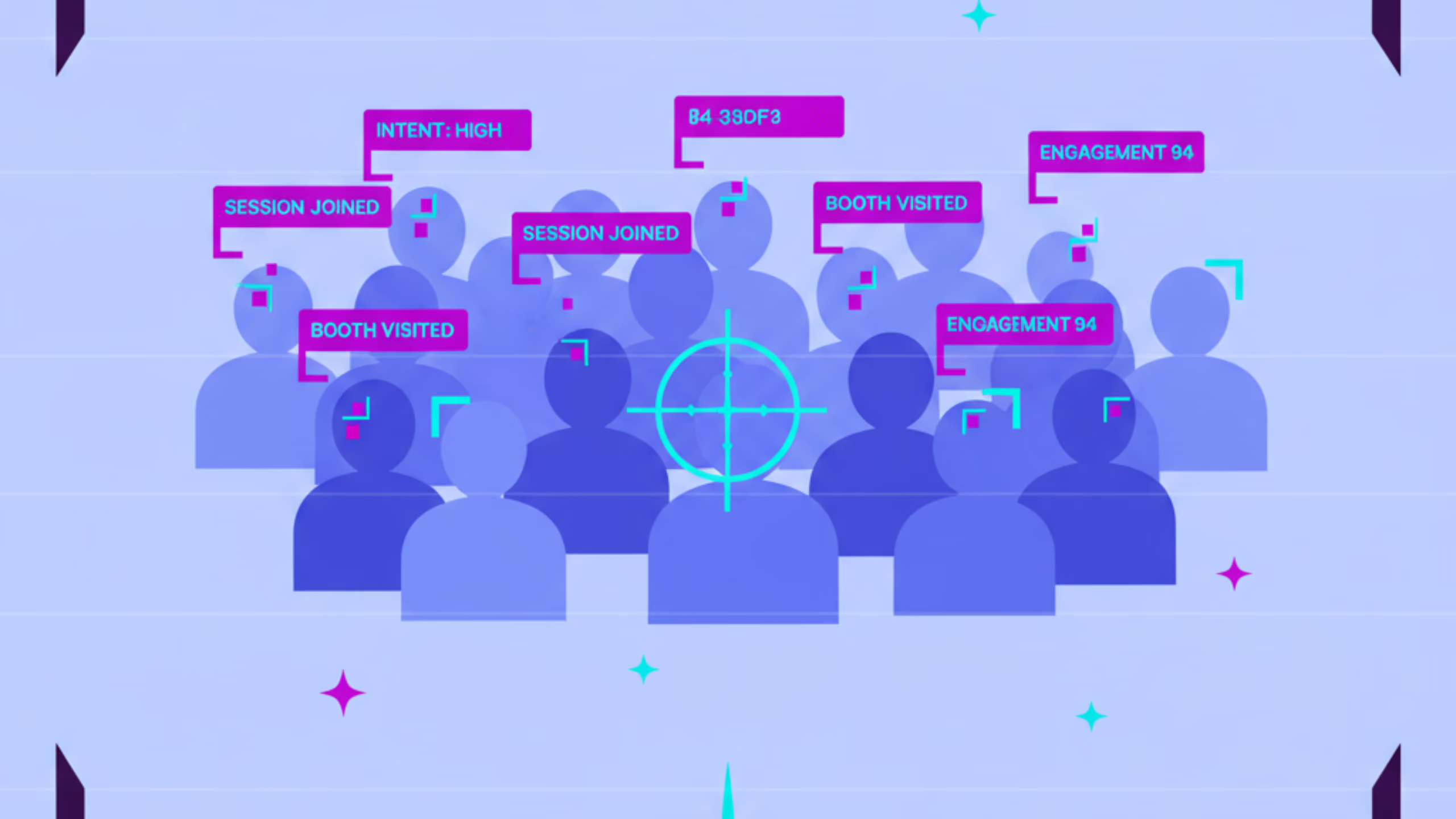
The people who show up to your event have a higher level of interest in what your brand does than if they'd signed up for a newsletter, let's say. The conversations you have with them and the context that provides is invaluable but hard to keep track of. You might have a hundred different business cards, some quick shorthand notes and a hastily built CSV at the end of an event.
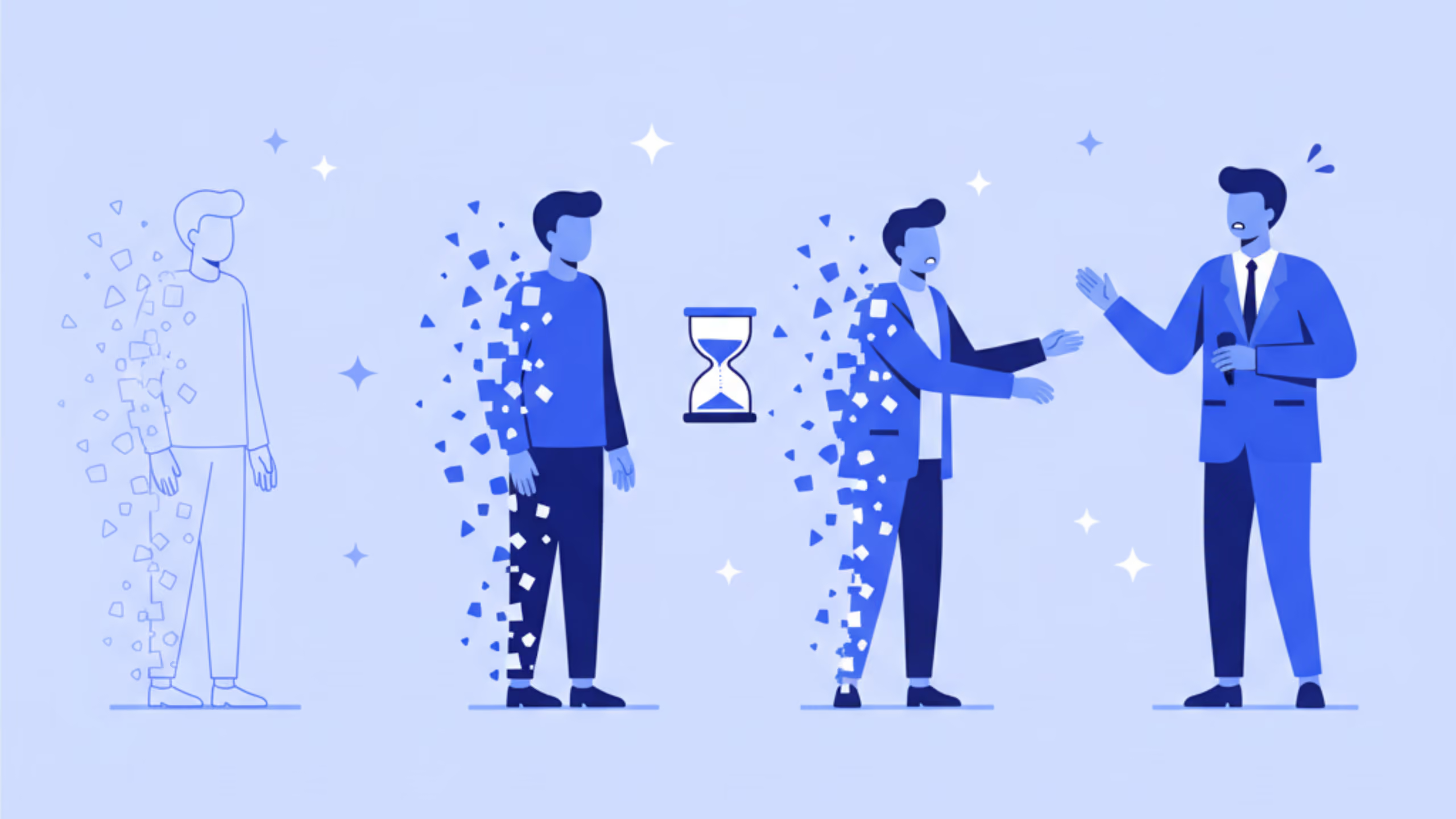
Context is like a rapidly decaying isotope: the quicker you act on it, the better. You know you have less than 48 hours to follow up with these leads before they forget the conversation or the trail goes cold. But even if you're able to export the badge scan list, clean the spreadsheet, match names to accounts in the CRM, and push the file to sales, not all leads make it through, and not all of them have attached notes that say "this person mentioned they're evaluating three vendors right now."

A name, title and event date don't help much without the details of what they said, but you do it anyway. A senior experience marketing director said: "We've all uploaded a chunk of leads in the system knowing that those leads are not really good. But this is what the stakeholders wanted. They wanted to see the X number."

That is being forced to squash a rich human signal into a number for a dashboard.

The problem is that the systems between the event and the CRM were never built to handle context efficiently. If you had records for what someone said, what session they attended, how long they stayed, what they asked, and where they are in their buying process, you would have solid reasons for a lead to respond.

What real-time event lead management makes possible

The right event platform closes the event marketing attribution gap by providing your team with context in near real-time. It solves the ‘spreadsheet two weeks after the event’ problem entirely.

An events team at a fast-growing logistics technology company moved from two-week post-event delays to real-time lead handoffs. It wasn't about faster exports; the CRM record updated while the event was still running, with session attendance, conversation notes and engagement signals attached to the account.

The SDR got the record while the memory was still warm on both sides. The follow-up became a continuation of a conversation rather than a cold call from someone who happened to attend the same event.

For this to happen, event marketing platforms need to treat context delivery as a first-class problem: badge-in alerts to the rep before the event ends, a CRM sync that captures what happened in the room and not just who was there, and follow-up workflows that trigger on engagement signals. A detailed breakdown of how to connect event activity to pipeline is in From Planning to Pipeline: Measuring the True Impact of Your Flagship Event.

When the gap between the event floor and the sales rep closes like this, the signal that the event marketer has always known is there actually becomes visible in reporting dashboards.

Events have and will continue to work. The event platform's job is to handle context so well that event outcomes become not something you report, but engineer.

Subscribe to our blog

Book A Demo
Deliver your best event ever with Zuddl

Subscribe to our blog now!

Get fresh ideas, actionable insights and expert guidance for B2B events delivered directly to your inbox!

The Event Influence Signal Your CRM Can't See

A Head of Events and Field Marketing at a fast-growing data reliability company described the moment her team finally closed a customer from an event dinner: "I literally had a celebration when we finally closed something. I have the proof that this business model not only starts and generates the opportunities, but goes all the way through."

The relief of finally having proof is a feeling every event marketer knows. There’s no question that events work. They're the only way to get people in a room and build trust and relationships face to face. A HockeyStack analysis showed that while events only receive credit for 6.5% of closed deals, event-sourced deals generally have higher ACVs and shorter sales cycles.

The proof that events work shouldn’t be hard to find.

The context problem in event marketing attribution

The people who show up to your event have a higher level of interest in what your brand does than if they'd signed up for a newsletter, let's say. The conversations you have with them and the context that provides is invaluable but hard to keep track of. You might have a hundred different business cards, some quick shorthand notes and a hastily built CSV at the end of an event.

Context is like a rapidly decaying isotope: the quicker you act on it, the better. You know you have less than 48 hours to follow up with these leads before they forget the conversation or the trail goes cold. But even if you're able to export the badge scan list, clean the spreadsheet, match names to accounts in the CRM, and push the file to sales, not all leads make it through, and not all of them have attached notes that say "this person mentioned they're evaluating three vendors right now."

A name, title and event date don't help much without the details of what they said, but you do it anyway. A senior experience marketing director said: "We've all uploaded a chunk of leads in the system knowing that those leads are not really good. But this is what the stakeholders wanted. They wanted to see the X number."

That is being forced to squash a rich human signal into a number for a dashboard.

The problem is that the systems between the event and the CRM were never built to handle context efficiently. If you had records for what someone said, what session they attended, how long they stayed, what they asked, and where they are in their buying process, you would have solid reasons for a lead to respond.

What real-time event lead management makes possible

The right event platform closes the event marketing attribution gap by providing your team with context in near real-time. It solves the ‘spreadsheet two weeks after the event’ problem entirely.

An events team at a fast-growing logistics technology company moved from two-week post-event delays to real-time lead handoffs. It wasn't about faster exports; the CRM record updated while the event was still running, with session attendance, conversation notes and engagement signals attached to the account.

The SDR got the record while the memory was still warm on both sides. The follow-up became a continuation of a conversation rather than a cold call from someone who happened to attend the same event.

For this to happen, event marketing platforms need to treat context delivery as a first-class problem: badge-in alerts to the rep before the event ends, a CRM sync that captures what happened in the room and not just who was there, and follow-up workflows that trigger on engagement signals. A detailed breakdown of how to connect event activity to pipeline is in From Planning to Pipeline: Measuring the True Impact of Your Flagship Event.

When the gap between the event floor and the sales rep closes like this, the signal that the event marketer has always known is there actually becomes visible in reporting dashboards.

Events have and will continue to work. The event platform's job is to handle context so well that event outcomes become not something you report, but engineer.

Subscribe to our blog

Book A Demo

Subscribe to our blog now!

Get fresh ideas, actionable insights and expert guidance for B2B events delivered directly to your inbox!

Our curated hub of inspiration

Take control of your virtual event production with Zuddl.
Own every step from registrations to approvals with Zuddl.
Own your event app from branding to CRM sync with Zuddl.
Book a Demo
Book A Demo
Book A Demo
Steph’s tip for event marketers: 
Bring a simple cost-savings table like this: 
Line Item
2024 Cost
2025 Cost(after negotiation)
Cost Savings
Venue package
$200k
$170k
$30k
Lead capture tech
$18k
$12k
$6k
Then say, “This $36K savings covers the increase I’m asking for.”