
.png)
Execs from Disney and Porsche. An Olympic skier teaching them the ropes on the slopes. You know every person in the room. You built the emotional arc of the event, and you weren't waiting on other teams to make it happen.
That's the version of the job most event marketers want to be doing, and it starts with getting out of the tooling mess that's been holding you back.
"I sent a report on the day of the event, something I've never done before," says an events lead that's been in the industry for years. She knows the wild west of four or five disconnected tools, where it takes weeks to reconcile who actually did what.
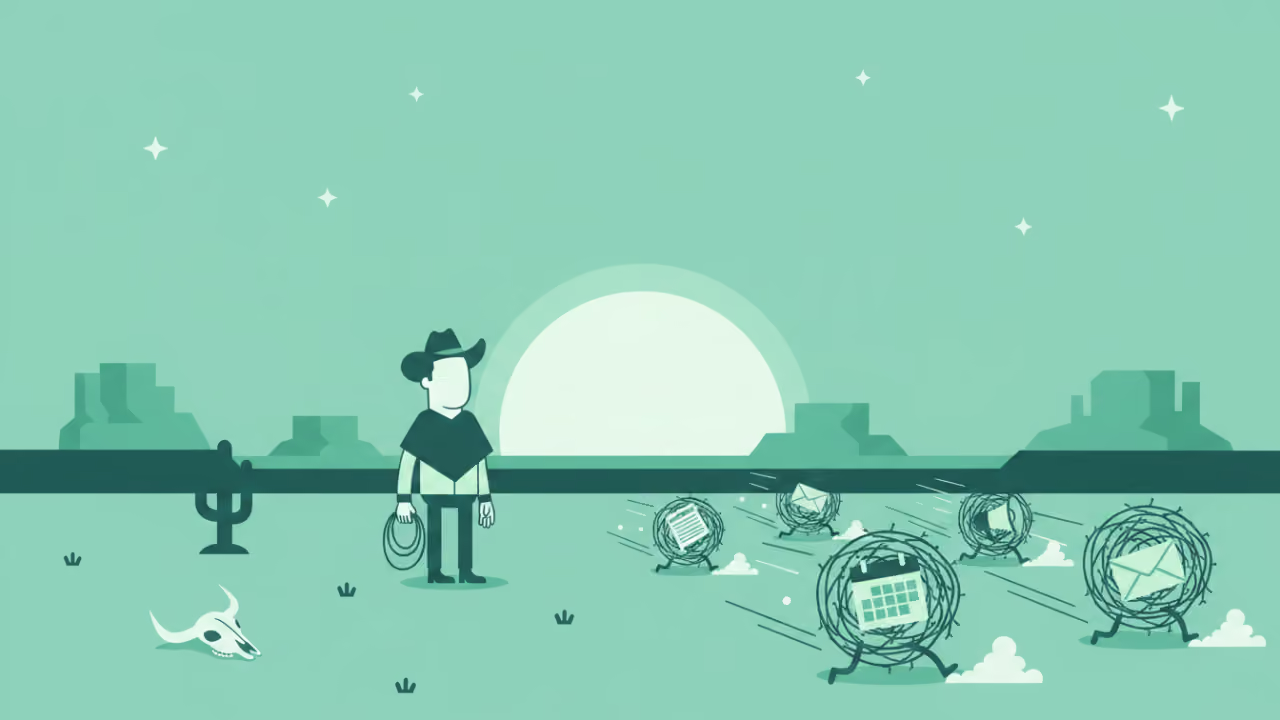
Moving out of that wild west needs structural change, and that's where the actual gains of AI in event marketing are.
What a unified event management platform makes possible
AI is only as useful as the context it has. Think of your first day at work: you can act on what you know (which on day one is probably not much). As you absorb more information, like every event your company has run, every session that worked, every attendee who showed up more than once, you start taking better and more strategic calls.
An AI-first B2B event management platform builds and accumulates this institutional memory.
When webinars, field events, and conferences all run on one platform, every attendee interaction builds into a single record. The contact who attended your January webinar and walked into your March field dinner is not two exports to reconcile, she’s one continuous relationship the platform has been building since the first event. That is the context the AI acts on.
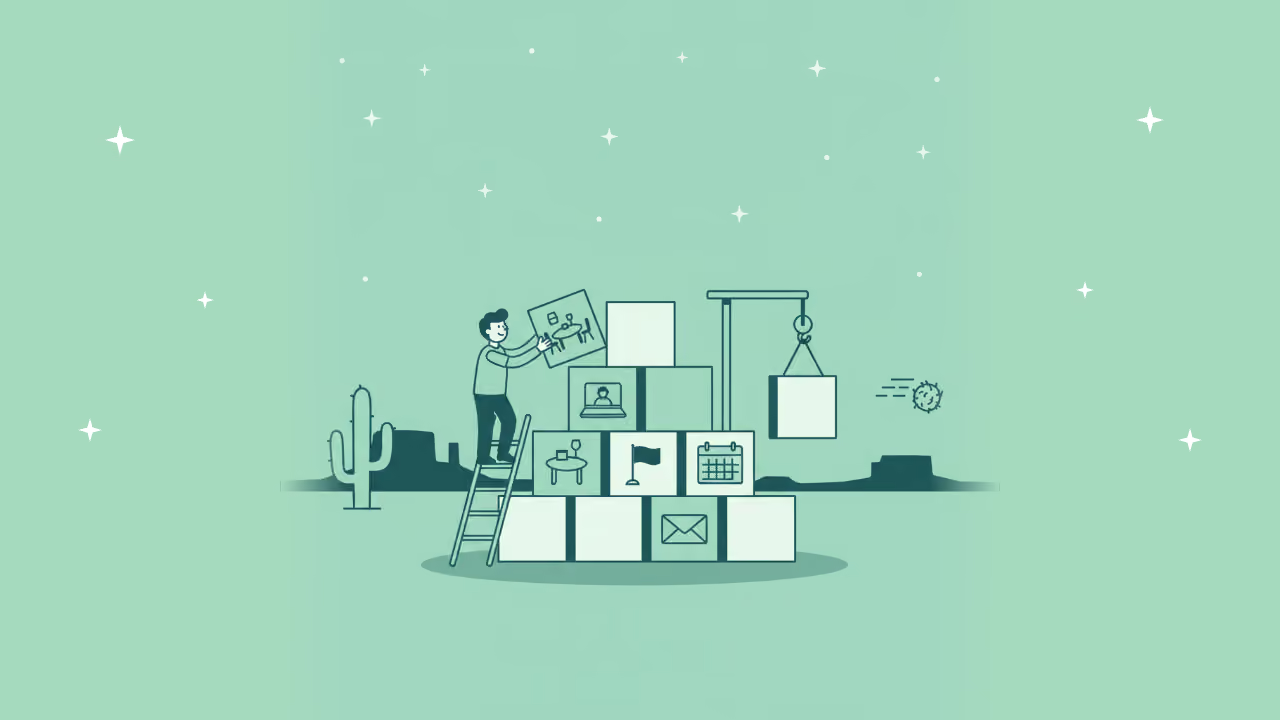
This also means you can define the different constraints (design, legal, marketing ops) once and every event inherits those guardrails. As an example, the first time you build a landing page, you lock in the brand - the logo placement, color palette, legal footer. Every page cloned after that starts from that locked state.
The same logic applies to how teams coordinate before the event. In most programs, nominations live in a spreadsheet that bounces between the event marketer, sales, and CS over Slack and email. Each person opens it, scans for their accounts, and makes decisions without seeing deal stage, engagement history, or whether the prospect has attended anything before.
When nominations happen inside the platform, CRM context is already in every row. The event marketer defines what a good guest looks like, and the platform scores each name against that description with live Salesforce data. A VP who used to toggle between three tabs to check each nominee now looks at a row, sees the context, and decides. Approved names sync to Marketo or the CRM in tiered waves without a manual re-upload or ops ticket.
For a breakdown of what event management software features to evaluate, check out this guide.
How do you know your event management platform is genuinely agentic?
As useful as guardrails are, true autonomy is the AI acting on the event marketer’s behalf (with the human in control, of course). Choosing event management software means knowing what that looks like. Here are four moments that show you that an event platform is genuinely unlocking new ways of running events:
1. The QA agent
Before: After building an event, someone goes through the entire setup by hand. Speaker bio, event date, registration form, CRM campaign connection. One wrong setting sends a broken confirmation email to 500 registrants or pushes the wrong leads to the wrong Salesforce campaign. Someone has to check that manually.
After: The event marketer writes the QA checklist in plain English and the platform executes it before launch. It checks each item, and flags what is wrong. She doesn’t have to find the mistake in the speaker bio because the platform can surface it before anyone else sees it.
2. Instant lead handoffs
Before: A stack of business cards to type up on the flight home, and a rented badge scanner whose export you get days after the event in whatever format the organizer felt like sending. Even when leads make it to the CRM, the event marketer ends up writing follow-up emails for sales because reps either don't follow up or send something generic.
After: When the event ends, the platform DMs each assigned rep in Slack with a summary of their accounts - who attended, which sessions they sat in, what questions they asked, what resources they downloaded. Follow-up emails are pre-drafted based on what each person actually did. If a rep hasn't followed up within the SLA, the platform escalates to their manager.
One events team went from two-week post-event delays to near-instantaneous lead handoffs - CRM records updated while the event was still running.
3. The sales reps who stopped emailing
Before: The person who owns the event fields a steady stream of Slack messages from sales reps. "Has this account registered? Is she on the waitlist?" Each one meant opening the platform, checking the record, and typing the answer back.
After: A rep asks in Slack whether a prospect has registered and gets an answer with full context. And when they need a dinner for a target account, they request it from Slack. The platform produces the event from the playbook that you set and routes it to events for review. The events team becomes editorial instead of operational.
4. Scalable content
Before: Extracting content after the event was almost a job in itself. There are session recordings to review. Quotable moments to identify and timestamp. Clips to pull or brief a video editor on, draft posts to write from notes.
After: When the session ends, the platform generates clips from the recording and drafts posts in the brand voice defined at setup. The event marketer leaves the venue with a content pipeline already seeded.
AI in B2B event marketing should give event teams a line of sight
When the event platform incorporates AI as more than just a ‘time-saving feature’, the event marketer can stop paying the operational tax.
An events lead can focus on creating event influence and run a strategic program. A SaaS firm saw this work at their flagship conference. They scored each session by topic, then matched that to what each attendee engaged with.
A prospect who spent the day in security sessions got security-focused follow-up instead of generic recap. "By the time I sat down to dinner on Day 1 [of the conference], we already had our Salesforce data built and shared, cadences loaded, and everything was ready to go for our team to take action the very next day,'' said the SaaS firm's marketing and sales operations lead.
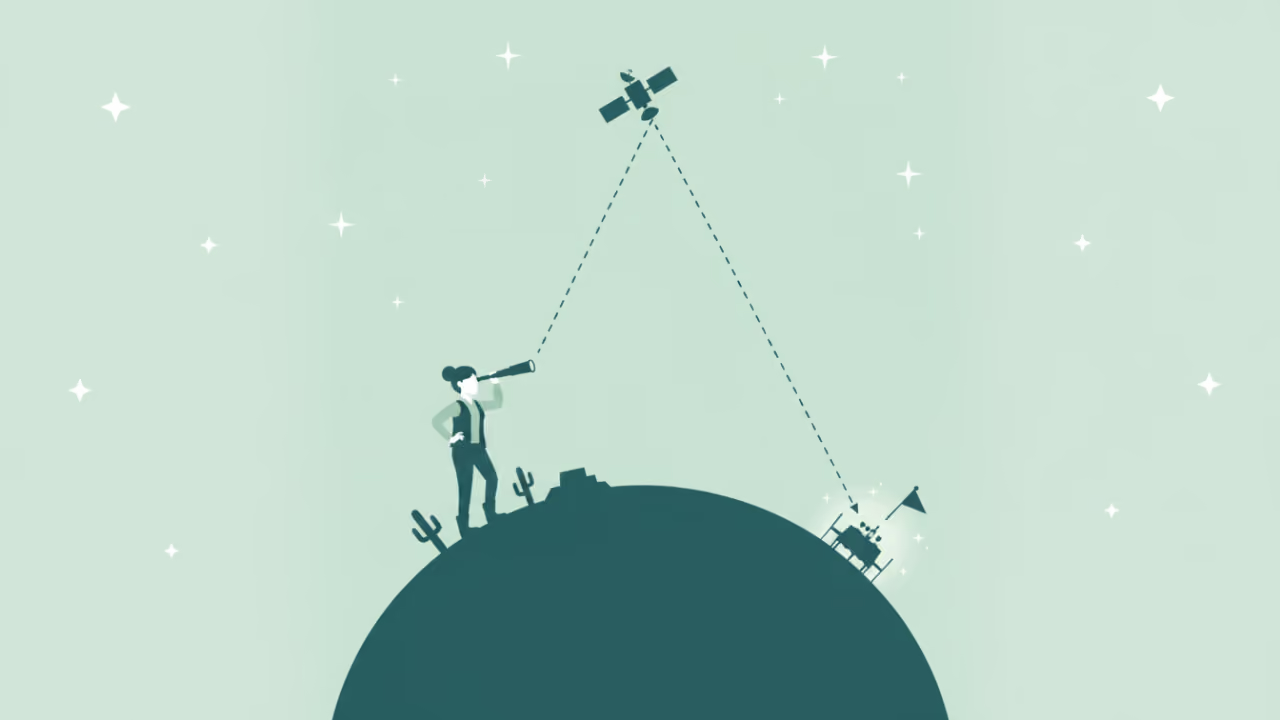
This is what AI in event marketing should help with - assembling the picture as it forms, and allowing events teams to take strategic calls. To see what this looks like in a platform, Zuddl's AI Agents are a great place to start.
{{demo-widget-1}}

Subscribe to our blog now!

.png)
.avif)


