
.avif)
"It wouldn't sync with Marketo. So we'd have to go in and manually change them on the Marketo side."
That's an event marketing manager at a data infrastructure company, describing what happens when someone who registered for the free happy hour changes their mind and upgrades to a paid conference pass.
Her team is not under-resourced. They run a multi-day user conference with sponsors, paid and free tiers, an exhibitor resource center and a call for papers. She has a registration platform she's worked in for five years, as well as a marketing automation platform, a web team, and a creative team.
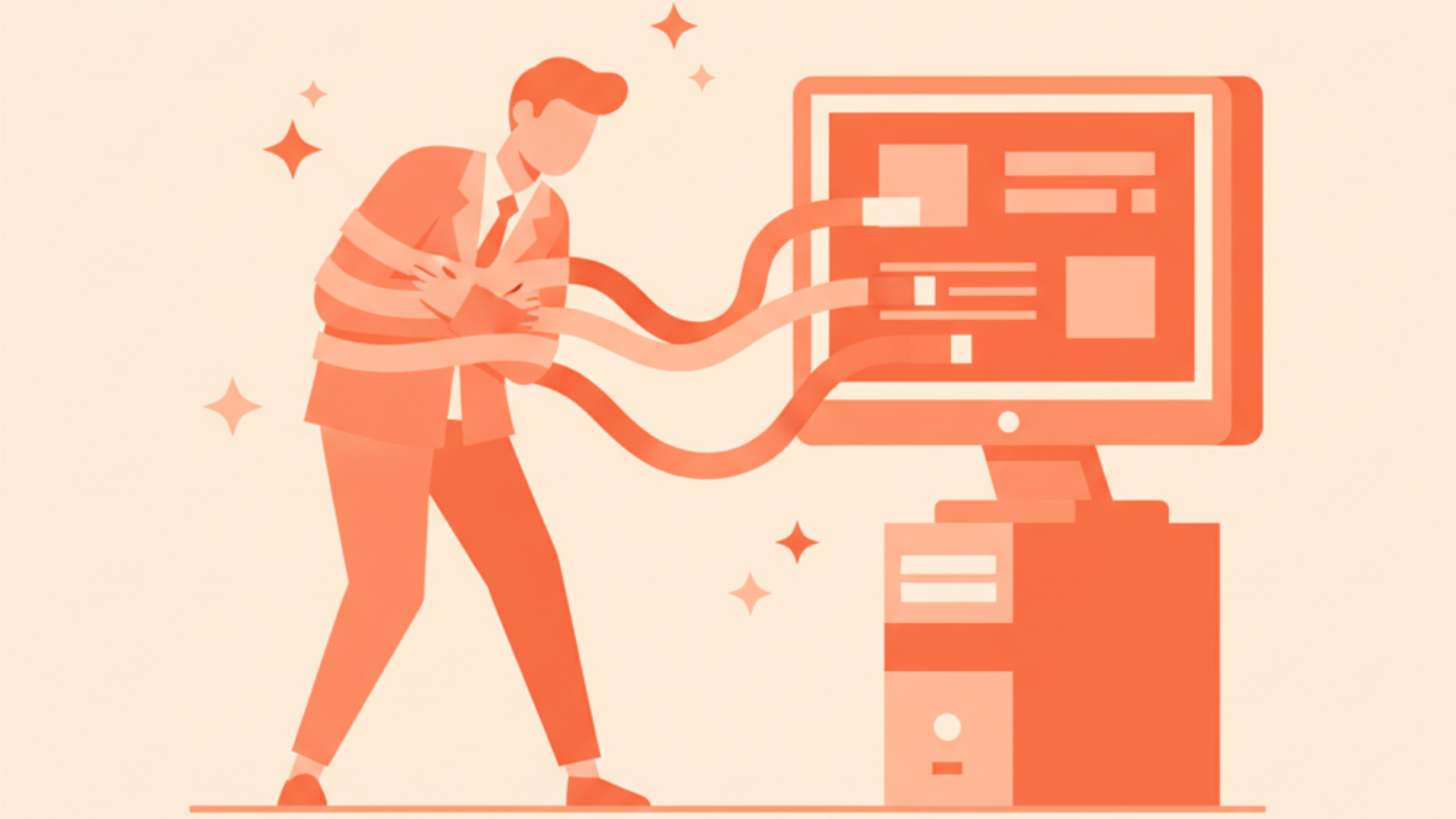
Yet they're still having to find manual workarounds because no platform connects the seams.
The job became defined by the tool stack's constraints, and that's not what you signed up for.
The bridge and the engine room
The event marketer's core job is forward-looking: what experience should this audience have, what outcomes should this event drive, and figuring out how the event program connects to revenue.
Or at least it should be.
[.ebook-q-card][.ebook-body-text]What's happened is the event marketer was also forced to take on the planning and logistics layer of the event: things like vendor coordination, manual data reconciliation after every event, and manual lead routing and CRM exports.[.ebook-body-text][.ebook-q-card]
Most event platforms were built for a slice of what running an event requires. You can buy each piece separately, but then your flagship conference runs on one platform it's always been on and field events on whatever a field marketer could spin up in twenty minutes.
This causes a bridge vs engine room problem, and it's best explained via a ship.
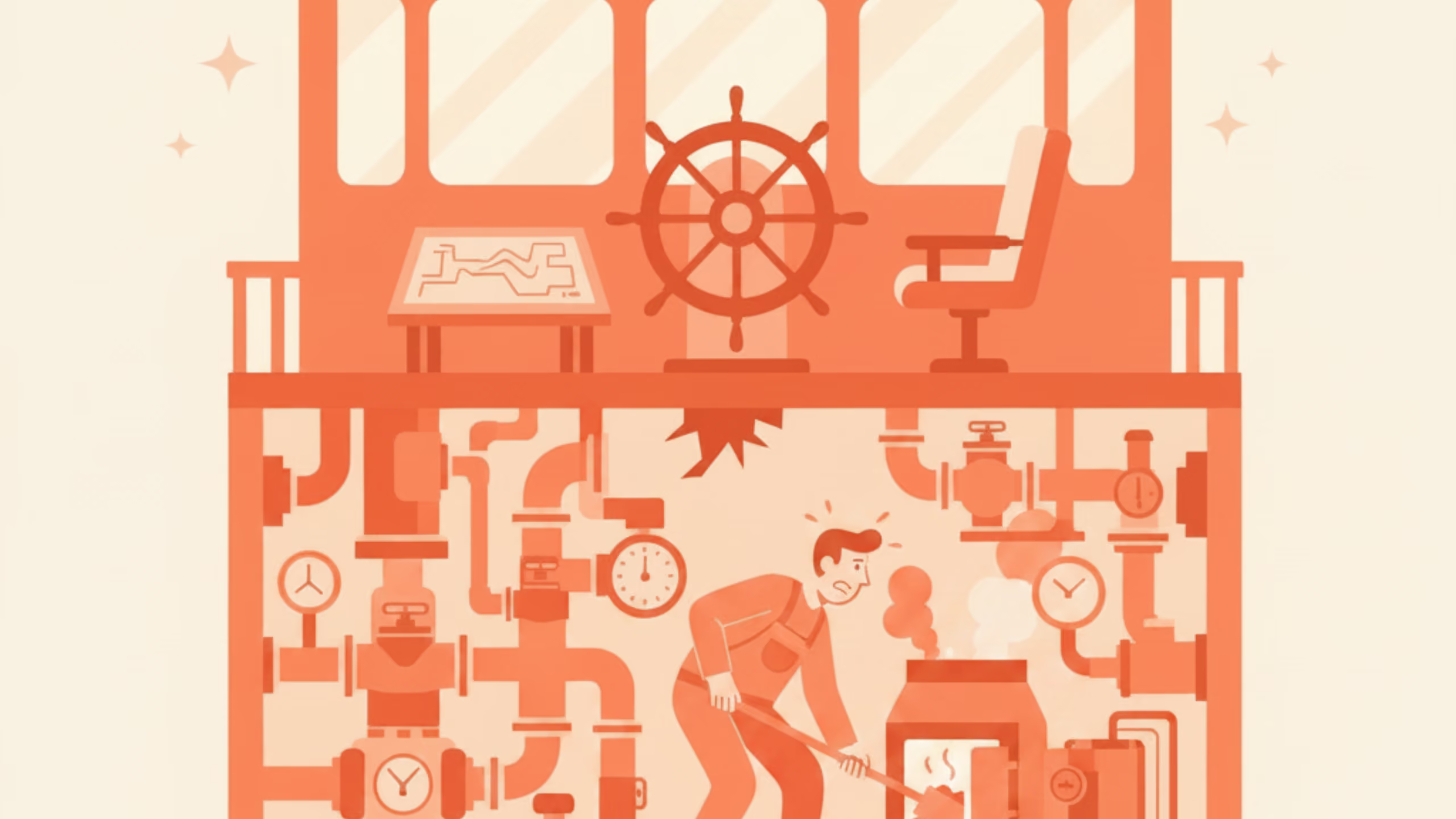
The bridge is where navigation happens. The officers read conditions, and chart a course for the future. The engine room is for propulsion. Engineers keep systems running, monitor pressure and respond to the now.
Both are necessary and vital to the ship. But one layer is strategic and the other is operational.
The event marketer wants to be on the bridge, but platforms keep you trapped in the engine room.
Why event marketing platforms keep you stuck at the logistics level
It's not that platforms are blind to the strategic side of the job; it's just never been vital to their survival. The buying process measures capabilities in fragments. The rubric is registration, badge printing, or a mobile app.
There's rarely any scoring for the handoff seams - eg. what happens when a registrant upgrades their ticket and your marketing automation platform never finds out. Platforms optimize for parts of the process, and that's why most of what's sold under the guise of event tech doesn't feel like a cohesive stack.
The event marketer competence trap
The event marketer got good at the logistics side almost by necessity. You built workable systems and found workarounds. Nobody questions whether a person should be doing something when they're doing it well.
The same event marketing manager from the opening describes building registration pages: "I'm not a web person, but I can build a [registration] page in a day and it looks pretty good. I have all these technical skills."

That competence made the structural issue seem normal, both to you and to the organization. From the leadership's perspective, they already bought the platform as the fix. The hours you spend patching and coordinating despite the platform then become the job.
How event management automation helps you get back to the bridge
The starting point for event marketers is understanding what's actually keeping you below deck.
One of the things you could do is log what operational or strategic work is taking up your week. It seems simple, but understanding where you stand currently will help you see how to get to the next step.

The next step is separating platform debt from event complexity. Not all engine room work is the same:
- Judgement work: This is yours. Deciding when to close registration, or taking calls on content
- Platform debt: Recurring manual processes that exist only because two systems don't talk - exporting to re-import, correcting records after a sync, rebuilding the same list in a second tool. This is what you need to be fighting
- Deliberate governance: Approval flows, restricted permissions or limited seats. This looks identical to platform debt but it’s an organizational choice
- Someone else's job: Sales not updating the CRM , or the CS team deciding mid-registration that a subset of attendees should also be invited to another event
For every manual workaround that's been running long enough to feel normal, ask whether it could be automated. Setup takes upfront time that most event marketers don't have, but one team found that configuring your tooling correctly can save 10-12 hours of manual work per event.
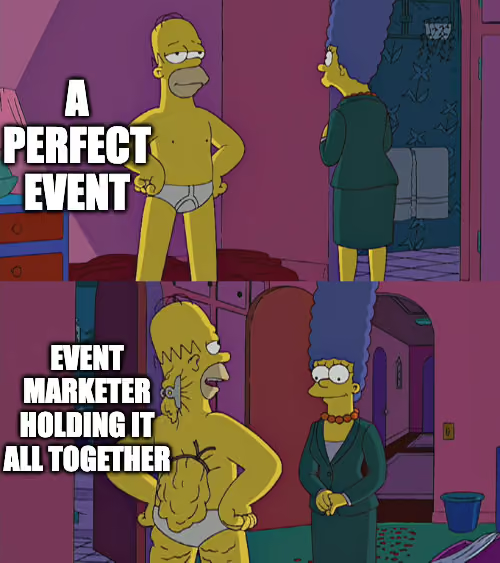
The last step is making the trade-off visible to the people around you. Your leadership sees the event but not the work behind it. One hour of data reconciliation is an hour not spent on experience design or pipeline strategy. Make that clear and connect it to things execs care about like lost pipeline, or resource waste. That is how you build the case for better tooling, more support, or both.
Event marketing platforms need to carry their weight
As one senior event professional put it: "We're still looked at as party planners. Live events are the number one driver of pipeline and trust for any company, and yet we're still not given the respect."
[.ebook-q-card][.ebook-body-text] This is a question of professional identity. [.ebook-body-text][.ebook-q-card]
The work of designing moments, from the attendee journey and the emotional arc of a day to the connection between what someone experiences and what they decide, is irreplaceable. It is not logistics. It is not being the connector between your tools.
For this to change, platforms need to build a shared context layer that can be updated in real-time. Whatever scans the badge at the booth and whatever runs the list for the field dinner should be writing to the same record for every lead.
That's how you can get out of the engine room and back to the bridge.
{{demo-widget-1}}

Subscribe to our blog now!

.png)
.avif)


