

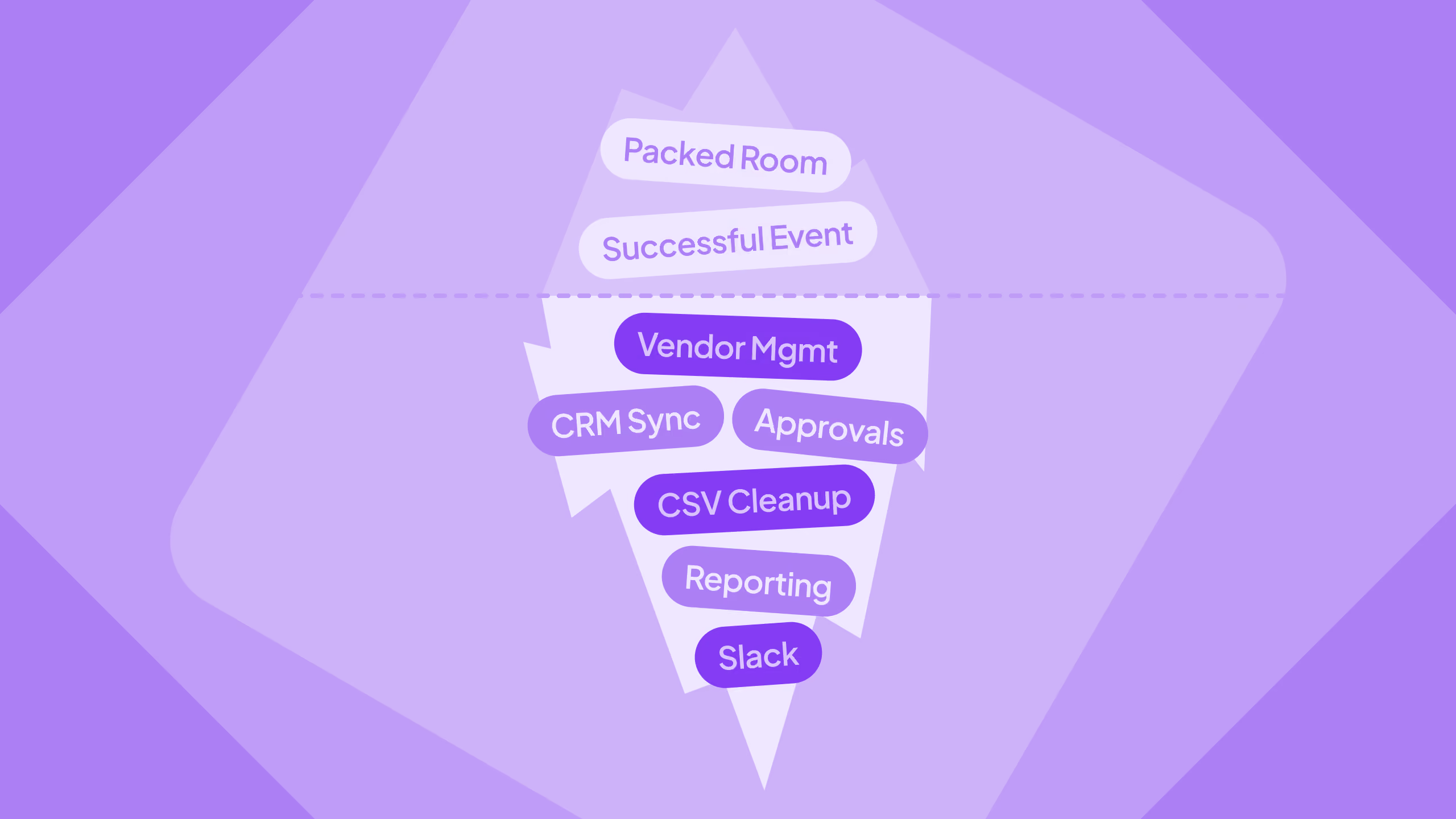
People care about the effects and not what it took to get there. B2B event marketing is like an iceberg in that sense; everyone sees the packed room and the applause your keynote speaker walks off to, when there's a lot more going on under the surface.
No one talks about the part after the applause. Those weeks you spent prepping promos, coordinating with vendors, and the last-minute calls you had to make. It is unreasonable for one person to do all that, but you did.
You feel it after every large event, every multi-city program, every field dinner and quarterly webinar series. It shows up as a sense of being dead on your feet but still carrying on because you have to. That's unreasonable too.
Questions need to be asked, and the answer might lie in how event platforms have been built.
Mind the (B2B event marketing platform) gap
If you raised an eyebrow at that, allow me to explain. You're so used to being in the weeds that the fatigue and the constant firefighting feel natural, even expected. Everyone else seems to be giving it 110%, so if you're not burning yourself out, you feel weirdly guilty. But normal isn't the same as acceptable.
A seasoned strategic events marketer once ran a 2,500-person virtual event alone. Forty speakers, a platform that was oversubscribed and glitching, and she was simultaneously presenting and troubleshooting in the background.
"It was just the most bizarre feeling," she said afterward, "of being alone in a room with nobody else around me. And then hosting 2,500 people. Just being back here, fixing all this stuff. Nobody would have any idea."
If her event platform had just flagged potential errors proactively before the event started, she would've fixed them earlier and had a lot more peace of mind running the show.
The tooling problem is made worse by the nature of events. Unlike a product launch or a PR announcement, once an event has a date, it's fixed. Every CSV you build by hand and every workaround the tool forces has to be managed in that window — and when the platform isn't built to carry its weight, all of its problems become yours.
Why the weight keeps accumulating in event marketing
Event management platforms were built to handle a specific set of tasks: registration, badge scanning, email sends, basic reporting. That covers, generously, about ten to fifteen percent of what running an event actually requires.
The rest of the job — pre-launch QA, vendor coordination, run-of-show management, post-event data reconciliation, lead routing, CRM sync — was never part of the tool’s product roadmap. It became the event marketer's job by accumulation.
[.ebook-q-card][.ebook-body-text] The data backs this up: event professionals spend nearly 49% of their time on administrative tasks. These tasks should either be automated or handled at the platform level. [.ebook-body-text][.ebook-q-card]
Inertia is a powerful phenomenon. Because it has always worked this way, nobody questioned it. The midnight spreadsheet is part of the job, as is the 11 PM vendor call.
And because an event marketer is in the thick of execution trying to get everything across the finish line, it's hard to step back and take a look at the broader picture. If you've never worked with a platform that carries its share of the operational load, you just don't know the bar that exists.
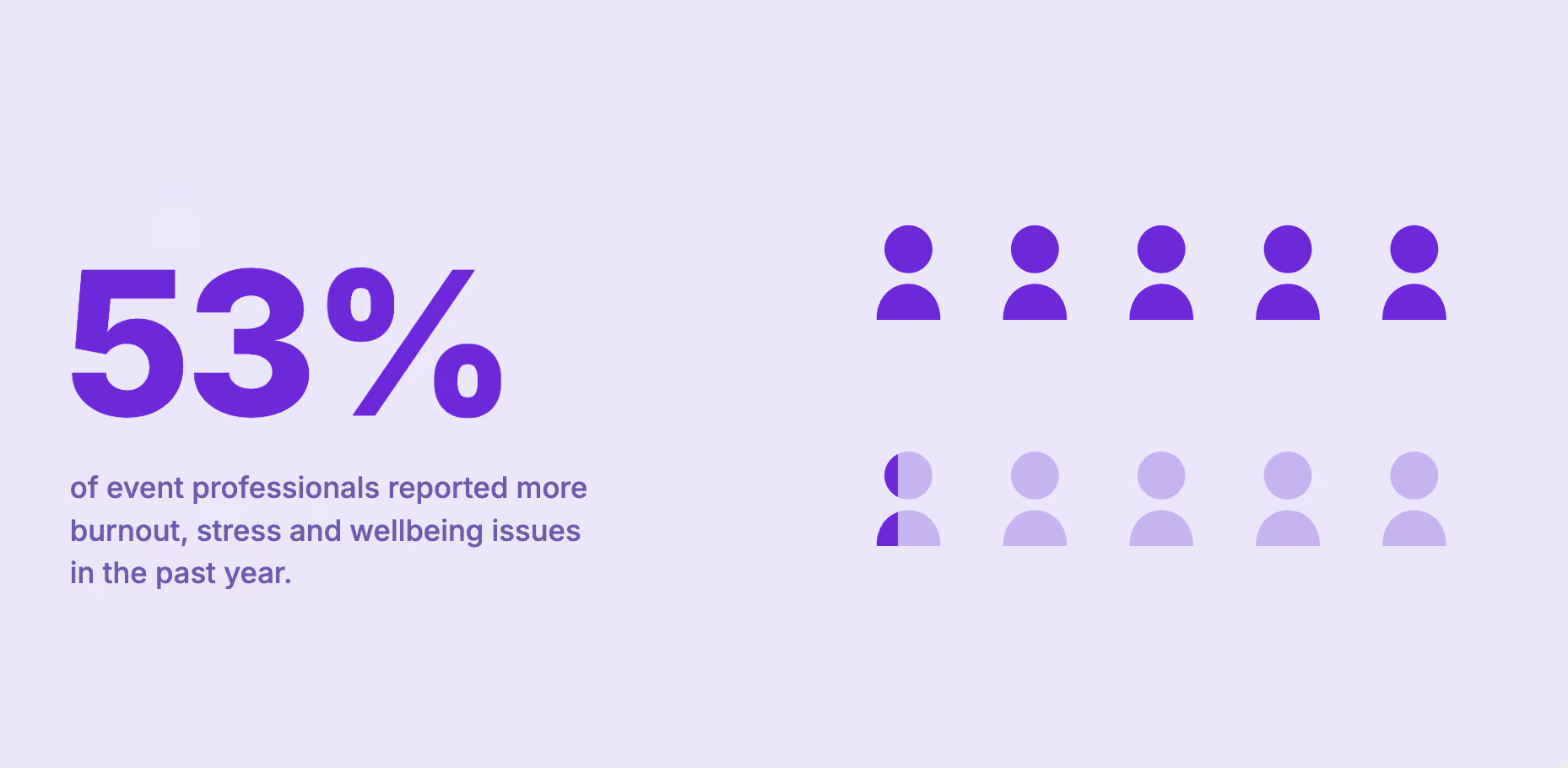
In June 2025, the Meetings Industry Association surveyed event professionals and found that 53% had an increase in burnout, stress, and wellbeing-related issues in the past year because of high workloads and tight deadlines.
The workload is high partly because the platform never carried its share. The deadline pressure is acute partly because most event platforms are not designed to catch and fix problems early or on the fly.
A self-reflection reframe for event marketers
Another unintended effect of carrying the event platform's responsibility is psychological. Human identity is intrinsically tied to what we're building. And if that project doesn't work out, a part of us feels like we failed.
Collapsing "something went wrong at the event" into "I failed" is so natural that it feels weird to call out. After all, isn't the event marketer responsible for everything to do with the event? But attributing it this way is wrong; it's like asking an artist to perform without a functioning sound system in the rain on a festival stage.
The question needs to move from "how do I get better at managing this?" to "what should the platform have been handling that I've been doing instead?"
The midnight CSV reconciliation, the post-event data export done manually at 2 AM, the pre-launch checklist run by one person against a run-of-show document because the platform doesn't do it — these things were a necessity because of a product design choice made years ago by people who built for the median use case.
It’s also frustrating because you have no control over the process. You can delegate a vendor call, but attribution only works if the campaign is linked with the CRM, which means waiting on MOps. All of this might be fine occasionally, but doing it a hundered or more times a year piles up.
Once you start asking what event platforms should be doing for you, the meaning of the workload changes. The post-event crash stops being a personal failing and you see it as the result of a sustained process. Maybe a better designed system would help you avoid the crash by handing you a choice.
None of this is the way it is because people running event platforms wanted you to struggle. For the longest time, events were seen as more of a branding channel with very direct needs: a tool for registration, and another for webinars. Platforms built to that ask one feature at a time, and the gaps between the tools widened. That was fine when teams ran a handul of events a year.
Today, events have become a primary GTM channel with revenue goals instead of being a nice-to-have. You're going from twenty events a year to 100+ with the same headcount. At that scale, holding all of the context, execution, and coordination together with manual workarounds limits how much your events program can grow. Adding more tools doesn't solve this because each tool only sees a slice of the problem.
This is what an event platform built on a shared database is designed to solve, where every part of the system has the same event context as you. Offload that context and the manual execution to the system, and you're free to focus on the strategic direction of your program.
The event marketer shouldn't end up doing both their job and the platform's. For too long, the event platforms have forced teams to work down at their level. It's time the bar was raised.

Subscribe to our blog now!

.png)
.avif)


