Halfway through 2023, chances are you've already attended several B2B events this year, and are questioning whether you can just skip Forrester's 2023 B2B Summit. Is it really worth your time and effort?
In a word: yes.
Namely because unpredictability and uncertainty have been the name of the game for the past few years. Marketers have had to deal with diversifying routes to market, changes in consumer behavior and difficult-to-predict buying motions.
That’s why the summit’s theme this year - ‘ADAPT. ACT. GROW’ - is timely and pertinent. At Forrester's 2023 B2B Summit North America, marketers can get key strategies, pragmatic frameworks, and compelling data they need to adapt quickly to changing market conditions.
When is it? June 5 – 7, 2023
Where is it?
This year’s edition is hybrid, with attendees able to either attend virtually or in-person in Austin.
Here’s what you can look forward to:
🎯 100+s tactical sessions aligned to marketing roles
Whether your focus is customer marketing, product marketing, marketing operations, demand and ABM, partner ecosystem marketing or sales, you can expect sessions addressing any and all challenges and goals that you’re currently facing at work. Take away ready-to-use insights and tactics that you can implement the very next day:
Here’s a snapshot of noteworthy sessions available for different roles:
Align Marketing, Product, And Sales Around Buyer Value To Propel Growth: A panel that provides practical tips for driving alignment and releasing each team’s potential and strategies for calibrating to and innovating on buyer value, led by analysts and experts at Forrester.
Beyond Alignment: How Sales And Marketing Leaders Integrate For Success: This session will explore how organizations integrate processes, technologies, teams, and practices to deliver a compelling buying experience
Lifecycle Revenue Marketing Is The Future Of B2B Growth: This session will outline buyer trends that are having the most impact on B2B marketing such as buyers being more self-guided or more prone to extending their purchasing processes, and identify LRM strategies that can help surface revenue opportunities out of customer adoption, loyalty, and advocacy initiatives.
Product-Led Growth: Right Fit, Right Approach For Your Organization? A session that helps marketers learn best principles, principles, practices, examples, metrics, and fit assessment, as well as next steps for product, marketing, sales, and customer success leaders.
In-person attendees also have the opportunity to take part in specialized pre-event sessions and workshops such as the ForrWomen Leadership Program which helps attendees learn how to help advance women leaders in their organizations.
📋 Case studies from globally leading brands and executives
Get first-hand knowledge from industry leaders - valuable insights into the strategies, tactics, and approaches employed by them that you can apply to your own marketing efforts, helping them drive growth and overcome obstacles.
Here are a few intriguing case studies on the Summit agenda:
Calendly: Smith.ai: How to Transform MQLs into Sales Meetings, Instantly: Today’s buyers hold the power, wanting to self-serve and resist salespeople until they’re ready. You’ll hear how Smith.ai’s sales team is giving buyers more control with a customer-first routing strategy to drive a 70% conversion rate from MQLs to meetings booked.
6sense: How to Do Frictionless, Revenue-Generating ABM: Learn how Twilio Segment built a collaborative partnership between marketing and sales, using 6sense’s intent and keyword signals. By focusing outbound campaigns on in-market buyers, the Segment GTM team booked 75+ meetings within one week of launch.
Mindtickle: Breakdown the silos to win together: How to implement a business pivot on a global scale: Hear from Jegen Kalimuthu, Global Sales Enablement at LinkedIn on how to tackle a global business transformation cross-functionally. Instead of finger-pointing and throwing in the towel, learn how enablement, marketing, sales leadership, and sales ops all play a role in implementing global change.
✨ Hear straight from the A-listers of B2B marketing
The line-up this year is incredible. Here are just a few of the speakers you can look forward to interacting with:
Dara Treseder CMO, Autodesk
Cheryl Cook SVP, Global Partner Marketing, Dell
Cindy Matos VP of Transformation and Governance, IBM
Katherine Chambers VP of Revenue Marketing, Cart.com
Jeanne Quinn Director, Partner Engagement & Thought Leadership, Cisco
🪄Find solution providers for your marketing, sales, and product needs
Whether you are transforming your entire digital customer journey or need help boosting your marketing or commerce experiences, you can find exactly the solutions you need at the Summit.
🤝 Connect with peers, experts and Forrester analysts
There are plenty of opportunities both structured and unstructured during the Summit to meet and connect with professionals like yourself.
During breaks, you can hit the show floor to connect with colleagues and peers.
But there are also plenty of networking activities built into the event agenda: breakfast boardrooms, invite-only dinners (e.g. an executive leadership exchange), as well as facilitated ‘birds of a feather’ small group discussions during which you can connect with peers facing similar challenges.
These group discussions in particular are great for focused, facilitated discussions on specific initiatives you are working on. And as a bonus - Forrester analysts and executive partners will be on hand to provide expert perspectives.
The takeaway
B2B marketing right now is all about needing to be strategic, sensing buyer needs, and knowing the right tactics that will resonate with buyers and sellers. At Forrester's B2B Summit North America 2023, you’ll get the data and insight you need to know exactly how to do this, and stay one step ahead in the dynamic world of B2B marketing.
In the rush to complete a laundry list of tasks involved in producing a webinar - landing page, speaker selection, social media promotion, email blasts, etc. - the abstract receives far less attention and care than its due. But this is a mistake that could be costing you.
A strong abstract can give your webinar the best chance of succeeding by attracting the right ICP and generating interest and curiosity, while a badly-written and poor-quality abstract will confuse or turn people off and reduce attendance.
So we should be aiming to write really, really persuasive abstracts, instead of settling for mediocre ones.
What exactly constitutes a strong abstract?
In today’s world of information overload, people are making snap decisions about what to pay attention to and what to ignore. So think about the abstract as a big billboard advertisement: if it’s done well, it will get your ICP’s attention.
To “sell” your webinar to prospective attendees, a powerful abstract must:
Communicate why this webinar topic is important and distinctive clearly; don’t write a mystery story that leaves it to them to figure out.
Highlight why the speaker or their perspective matters - why should your ICP take it and take you seriously?
Spell out the value that attendees will receive by attending the webinar. This sets up expectations so when people do attend, they get what they were hoping for.
Easier said than done.
Writing this requires both creativity and strategic thinking. There’s a lot of information to pack in about the speaker and the topic, whilst playing on your ICP’s challenges, motivations and goals. But here’s a framework that can help:
A blueprint for crafting a powerful abstract
Step 1. The headline
Ask an interesting question
Address a specific problem or goal - the more focused, the better
Use ‘How to’ or ‘Steps’ to show the value the attendee will get
Add personality when possible
Convey it in 12 words or less
Templates:
Is your [function/issue of concern] strategy really working?
How to [achieve a goal] in [timeframe] without [a pain point]
The do’s and don’t of [an issue of concern]
How to [achieve a goal] in [number] of steps
[Number] ways/strategies/tips/secrets to [achieve a goal] in [current year]
[Topic] trends changing the way we [something you take for granted]
Examples:
The do's and don'ts of webinar landing pages
How to double attendee turnout at your webinars in just 5 steps
10 new strategies to help you easily build a pipeline for webinar guest speakers
On-demand vs. live webinars: Which is better for MQL generation and why
5 ways webinars will change in 2024
Step 2. The introduction
Get straight to the point - no fluff or generalizations. Don’t tell the reader what they already know.
Set the context by establishing the pain points. Your reader is looking for someone who understands their challenge or problem.
Or prompt curiosity by asking a question that asks readers to a) re-examine the status quo b) ask themselves a question that they should be asking
Convey this in 1- 3 sentences
Examples:
Here’s a great example by Cloudsmith: “Containers and Microservices architectures are no longer the new kid on the block, and it may be time to take a fresh look at your ecosystem.”
Or this by Mindtickle: “It’s time for sales leaders, enablement, and ops to align on one common purpose: increasing revenue productivity. But how do you go about doing it?”
And this by Common Room: Building one-on-one relationships with community members is one of the most rewarding and impactful parts of leading a community program—but how do you scale to meet member needs when one turns into one hundred thousand? And how do you manage an ever-growing pack of internal stakeholders to ensure they understand (and contribute to) the value of your user community?
Step 3. The rest of the body
Having established a pain point or prompted curiosity, use the rest of the abstract to build trust and interest
Use bullet points to give the audience an idea of the talking points that will be discussed in the webinar. Keep it short and crisp to make it skimmable.
Always keep in mind your intended audience - do they prefer stories or facts? Would they want demonstrations or just recommendations?
Use industry-specific terminology to set the expectation that you’re already attuned to your target audience.
Highlight your speaker’s domain expertise and industry experience to substantiate credibility. If you can quote any details pertinent to the pain point/goal discussed in the webinar, even better.
Examples:
Another one from Cloudsmith:
In this session SLSA experts from across the industry gather to discuss the practical uses of the framework and address topics such as: What controls are included in the specification and why Real world developer approaches to software supply chain security What's working and what's not working in software supply chain security Featuring: Isaac Hepworth, Group Product Manager, Software Supply Chain, Google
And here’s a description about a webinar titled ‘Is the MQL dead? by Drift that provides background for the talk and highlights the specifics that will be covered:
Here’s one more example that gets everything right
Drive better impact from a well-written abstract
We hope that if you take away anything from this piece, it’s an understanding of why your webinar abstract deserves as much time and care - or more - than the other activities in your webinar production laundry list.
Stick to this 3 step blueprint and you’ll be able to set the stage for a compelling and engaging webinar experience that drives positive results, such as increased attendance, participant engagement, and post-webinar actions.
Presenting our May updates - with even more control and support for all your event needs.
Elevate your landing page with new widgets, get additional help with our brand-new video guides, make your speakers more reachable with social media links, and record your sessions with our improved interface.
Widgets for the landing page
New custom widgets for your landing page
We have two new custom widgets for your landing page: the Schedule widget that adds the event schedule to your page, and the Speaker widget that adds information about speakers.
You can find these inside the landing page editor, under Widgets.
Video guides
Get additional help during setup
Video tutorials have been added to certain sections of the organizer side setup, to give support and aid in different parts of the setup. These can be viewed from the page header, where you can click Watch tutorial to play the video.
Social links for speakers
Help your audiences connect with speakers
When adding speakers to your event, you can now also add links to their social media accounts to help audiences better connect with them. You can add upto 4 links for each speaker when you add them to your event: Facebook, Twitter, LinkedIn, and a website.
Studio recordings
Improvements to the recording settings
Recordings are made easier with some new improvements. A new recording status indicator makes it prominently visible whether recordings are turned on or off, and you can view this before you start your session. We’ve also added a confirmation popup to ensure that recordings aren’t accidentally turned off.
Organizations invest time, effort, and money into hosting events for many purposes, including fundraising, networking, and marketing. At the event’s end, you’ll naturally want to determine if it was successful and if you met your goals. You can do this by establishing key metrics to evaluate your event.
To help you better understand the impact of your event, this guide will cover the following topics:
3 types of event impact metrics to evaluate
Driving impact with your event: 3 tips
Keep in mind that your organization is unique—what another organization considers an impactful event may not be impactful for you. Consider these metrics through the lens of your organization’s size, audience, and outcomes from past events.
3 types of metrics to evaluate events
Let’s dive into the different types of metrics your organization can use to analyze your event’s impact.
1. Financial event metrics
For most organizations, financial metrics are the most obvious way to evaluate the impact of an event. Return on investment (ROI) is the most important finance-related metric, but you’ll need to know these metrics to calculate it:
Event costs: This will include all expenses and funds put towards organizing and hosting the event.
Leads generated: Events can generate leads that you can further nurture and convert into a customer.
To calculate your ROI, divide the revenue generated by leads from your event by the total amount of expenses. This tells you how efficiently you allocated your funds, and organizations should aim to have as high an ROI as possible.
These metrics can provide a clear-cut answer as to whether your event was a financial success. However, other metrics are needed to determine why your event had the impact that it did.
2. Event attendance metrics
Aside from financial metrics, you can also look at attendance-related metrics to evaluate your event’s impact. These data points provide insight into your marketing, the makeup of your target audience, and your overall ability to cultivate a loyal and engaged audience. Record and reflect on event attendance metrics such as:
Number of attendees: The number of people who attend your event indicates how successful your marketing and promotional efforts were.
Attendee demographics: Compare the demographics of event attendees to that of your target audience. Ask yourself if you’re attracting your ideal attendees, and if not, how you can change your marketing strategy for future events.
Attendance over time: Consider similar events you have hosted in the past and compare the number of attendees for those events versus your most recent event. Consistent audience retention indicates your events are high-quality, as guests who attended a previous event feel motivated to attend your next one as well.
Aside from overall event attendance, also assess the attendee-related metrics for specific activities featured at your event. For example, if your organization works in the digital marketing vertical and hosted several informational panels, compare the number and demographics of attendees across panels to identify what types of content are most interesting to your target audience.
3. Event engagement metrics
Alongside financial and attendance metrics, event engagement metrics provide unique insight into the impact of your event. Unlike the aforementioned metrics, however, event engagement is less of a quantitative measure and more qualitative, making it difficult to measure. To better quantify your event engagement, examine these metrics:
Conversions: Assess how many attendees continue to engage with the organization after the event. Continued engagement might mean that they subscribe to your email newsletter, or that they become a customer or member.
Satisfaction: Ask your supporters to rate their overall satisfaction and satisfaction with various event aspects and activities to get a general understanding of how engaged and happy they were with the event.
One of the best ways to evaluate how engaged attendees were with your event is to ask them for their opinion. At the event’s close, send an email thanking attendees for their participation, and include a survey that they can take to provide their feedback. Stress to them that this information will help you create a better event experience in the future.
Now that you know what metrics to examine, use the following tips to improve your event and drive conversions.
1. Set a clear goal
When planning your event, start by determining its purpose. Ask yourself what you hope to accomplish by gathering your attendees together and how that will benefit your organization in the long run. For example, if you’re an advocacy group, bringing attendees together can help you spread awareness about your cause. Or, if you’re a business promoting a new product, your event’s purpose might be to lead more people down the marketing funnel.
When setting your goal, keep in mind that it should be specific, measurable, and relevant to your organization’s overall objectives. Ensure that it’s attainable, and align all parts of your event with it, including event format and target audience.
2. Promote your event
To boost attendee turnout, you’ll need to market and promote your event well in advance. Build anticipation and give guests the time to clear their schedules and make preparations for attending by creating and sending promotional materials through these channels:
Your website
Direct mail
Email
Text
Social media
Flyers
To reach the largest number of interested individuals, use multiple marketing channels. Choose channels that your target audience frequents. For example, if your organization has an active Instagram account with many followers, post an image inviting them to attend your next bikeathon.
3. Incorporate technology to enhance the experience
Incorporating technology into your organization’s event can result in a more engaged audience and an improved guest experience. You can make attendees’ lives more convenient by allowing mobile check-in and sending them text reminders in the days leading up to your event. If your event is convention-style, consider creating a mobile app that attendees can download to easily track the schedule and activities they’re interested in.
Aside from making processes more convenient for attendees, you can also use technology to augment your activities. For example, if you’re hosting a Q&A session with industry professionals, have a screen displaying real-time social media engagement and encourage attendees to post questions that the professionals can answer. Additionally, use live streaming technology to organize hybrid and virtual events, increasing participation from individuals that may not be able to attend in person.
Maximizing your event’s impact begins with assessing your existing data. Consider what insights that information gives you, and use it to alter and improve upon your future events. After every event, sit down with the rest of your team and discuss key takeaways and improvements. Learn what type of events best fit specific purposes, and you’ll see the desired impact in your organization’s events.
Let’s face it. Organizing webinars is just not as easy as the thousands of ‘How to host a webinar and drive lots of revenue’ articles make it out to be. There’s so many steps involved, from sourcing the speaker to planning the dry run, making the landing page to sending out emails, etc.
But even if you have a solid plan in place, you may be overlooking simple steps or activities that can completely derail your efforts, leaving you like this:
So in this article, we’ll cover the top 5 ways you could inadvertently shoot yourself in the foot - and tips on how to prevent this.
1. You send out basic follow-up emails after someone registers
The mistake: It can be tempting to schedule ‘1 week to go’, ‘1 day to go’ and ‘1 hour to go’ emails, emphasizing ONLY the date and time of your webinar, and call it a day. But you need something beyond just this to keep interest in your webinar piqued.
The solution: This is why it's important to keep reminding registrants the value of turning up on the day-of. This means that in every follow-up email you send, you need to reiterate why your webinar is unmissable. And you can do this through some simple ways:
Share a screenshot of your previous webinar, highlighting the interactivity of the Chat for instance, or a learning moment that an attendee had.
Share social proof of positive tweets or comments from attendees at your previous webinars.
Play up the FOMO by highlighting what the registrant will lose out on if they skip the webinar, for instance ‘Learn how to double your leads from a webinar by the end of the hour.’
Offer an exclusive perk for those that do attend live.
2.You pick the entirely wrong date and the wrong time for the webinar
The mistake: If you’re not factoring in the day of the week, holidays, other industry events, and timezones, you’re making it difficult for people to want to attend your webinar. If it conflicts with anything else they have going on, you can bet this is how they’ll react:
The solution: Center your scheduling around your target audience’s availability.
Marketing wisdom states that Tuesdays and Thursdays are the best dates for a webinar. (On Mondays, people are in the thick of planning their work for the week while on Fridays, it’s likely that most people are already in a weekend mood and unlikely to tune in. ) But take this with a grain of salt, and use your analytics to determine which day attracted the most turnout.
Avoid the run up to holidays like Easter, Thanksgiving and Christmas and conflicting major events, whether that’s an industry conference or the Superbowl.
Time differences can cause scheduling conflicts - it’s very difficult to accommodate everyone, so shoot for the majority instead. At Zuddl we usually schedule webinars at around 10:30 AM PT as it corresponds to accessible time zones across most geographies.
3.You take a hands-off approach with your webinar speakers
The mistake: Your speakers are busy, busy people, so while they may confirm their availability on a specific date and time for your webinar, this can quickly change. It’s just life.
But if the only communication with your speaker is weeks after the initial call, then you’re only going to hear about a change in their availability later rather than sooner. This may mean having to cancel your webinar altogether - and quite abruptly.
The solution: Check-in with your speaker at regular intervals. Not only does this help build the organizer-speaker relationship, but enables you to spot red flags early on - like if a speaker requests a time or date change more than once, or doesn’t respond to your follow-up emails.
4.You decide not to make a basic conversation flow for your speaker and host
The mistake: We’re not telling you to make your speaker and host read directly from a script - that’ll only make them sound either like a robot or a news presenter. But not providing them with a conversation guide either is a mistake.
It leaves too much room for interpretation, by which we mean that the speaker and host could go wildly off topic, or not quite know how to navigate moving from one sub-topic to another leading to lots of awkwardness during the webinar, and causing attendees to drop-off the call.
The solution: A conversational flow can help guide your host and speaker through all the topics they need to cover, whilst letting them sound natural and conversational. This isn’t as complicated as you think. Even something as simple as this will work:
Introduction
The host introduces the webinar/webinar series and goal E.g. “Welcome to Event Heroes - a show where we engage with industry professionals to offer you practical guidance on crafting a successful event strategy and executing it with excellence, all to maximize your returns.”
The host introduces the guest speaker and their career story E.g. for our webinar with Alex Temple - “Our guest today is Alex Temple, Senior Corporate Relations Manager at Explori. Now, Explori is an attendee feedback platform for events, expos and event venues.”
The host asks the guest to introduce themselves E.g. “Hi, thanks for having me on as a guest today. I’m a B2B event marketer with 15 years of experience., etc. etc.’
Educational content
Questions that touch upon the pain point or goals that your audience signed up for E.g. Solutions to challenges in the industry, a new perspective on an age-old practice, commentary on new trends, insights and best practices from their day-to-day. Protip: Use customized questions on registration forms to gauge what attendees are really interested in learning at the webinar
Q/A
The host reads out questions shared by the attendees in the Chat or using a Q/A tool and prompts the speaker to answer each in turn
Fun rapid fire
End the session on a high note with fun questions for the speaker E.g. ‘What are you proud of, but never have an excuse to talk about?’ or ‘If you were a pizza topping what would you be and why?
Closing and next steps
The host thanks the speaker for their time and the attendees for theirs. Then, the host shares next steps. E.g. “Thank you for joining us to learn about <X topic> and hope you learned a lot. We’ll be sharing a link to a video recording of this webinar with you in an email so you can go back and watch it at a time of your convenience.’
5. And you opt not to do a practice run
The mistake: Without a practice run, you may not realize issues with the software or your speakers presentation or your showflow (ie. it might be too short or too long). As a result, you may appear unprofessional, confuse or bore your audience, and self-sabotage the opportunity to make a positive impact.
The solution: Do a dry run. Not only can you check that everything is in working order - webinar platform, presentation flow, speaking points etc. - but it helps your speaker feel more comfortable and confident too.
Prevent mistakes instead of trying to firefight them
No one is immune to making mistakes, but knowing what obstacles are ahead makes it that much easier to overcome them.
We get it; planning a large-scale B2B conference can be intimidating. There are lots of moving parts involved; coordination with teams, sourcing speakers, setting up your event, promoting your event - we can go on and on.
The challenges of planning and hosting an event of this scale will always be present, but the good news is you can overcome and deal with them better if you have a tested approach to guide you on ground.
That’s exactly why we spoke to Varun Singh, Head of Marketing, Rocketlane to get some on-ground insights on what it takes to pull off a successful large-scale B2B conference. For context, Rocketlane recently concluded hosting the world’s first customer onboarding conference, Propel ‘23 - with 3,500+ virtual attendees.
Here are some really interesting tips that emerged from that conversation.
{{demo-widget}}
How to build an agenda for a conference of this scale
One of the challenges marketers face while planning a big event is around what topics to cover. This becomes even more complex when your attendees are from different profiles as you need to ensure that every attendee finds value in your event.
When we asked Varun about how he went about creating an agenda for Propel ‘23, he said that narrowing the scope of the conference (customer onboarding, implement and post-sales for example) helped Rocketlane deliver more focused content to attendees. It also enabled them to create a mix of dedicated sessions for each profile, while still providing a few sessions of common interest.
How to align all the moving parts and collaborate internally
When it comes to pulling off a global conference, it truly takes a village. Event marketers have to collaborate with different internal functions to fulfil tasks and sub-tasks, which is an event in itself!
When we asked Varun how much internal collaboration was needed for Propel ‘23, he said:
“Our design team took care of all the speaker presentations and landing pages, and our web development team focused on having the event site up and ready. Our dedicated Ops person ensured data from event landing pages seamlessly integrated with CRM tools, and our content team handled copies for landing pages, emails and social posts. Our support team would drive registrations to any prospect who would chat with them. Also, our CSM team would recommend Propel 23’ to our existing customers - so it was a combined effort - all working towards one common goal.”
How to repurpose your conference content
Any large-scale event is like a goldmine of fresh insights, fresh perspectives and expert-driven content that deserves to be extracted, repurposed and promoted. While most marketers are onboard with repurposing as a content strategy, they often face logistical challenges when it comes to exporting and editing event content, which often delays the publishing process, rendering the content a bit cold.
We asked Varun about his plan around repurposing content from Propel ‘23 - here’s what he shared.
“The video recordings were made live within 4 working days from the event on our website. Talking about repurposing these videos, we’ve already come up with cheat sheets based on conversations from tracks that were focused on specific sub-topics, and we gate these cheat sheets on our site. Also, we publish an Idea Book that compiles snippets from various sessions. Thirdly, we have different blog summaries based on each session from the event.”
How to collect and implement feedback
For B2B conferences, especially ones that have future editions, feedback plays a monumental role in the growth of the conference as a brand - it’s the only way you know what your attendees loved and what they didn’t.
But the trick with event feedback is that it needs to be collected while the impact of the event is still hot in the attendee’s mind. Here’s some insight into how Rocketlane does it:
“With feedback, you can have a combination of quantitative and qualitative questions. Some open-ended ones and some very direct ones. Once you get all of that, you decode how to use it to plan a better conference the next year. For example, in Propel 2022, we had sessions one after the other. When we observed the feedback on this, we made incremental changes to the 2023 editions by ensuring we have networking breaks planned between sessions - all these inputs only come from feedback.”
You can watch our full conversation with Varun Singh right here.
Hope you find these tips useful - now go own your next B2B conference!
The chatbot’s ability to write complex text - academic, journalistic, and programming, among others - in a human, friendly and intelligent way is unrivaled, leading Bill Gates to call it the most revolutionary tech in decades.
Indeed, prompted to write a blurb about this very article, ChatGPT responded:
While many have praised the chatbot’s ability to answer questions, write essays, summarize documents and write software, others have criticized it for providing responses that are somewhat stilted, and basic. In which case, are event marketers better off just relying on their own skills? Or is this chatbot a marketer’s new favorite colleague?
As they say ‘Seeing is believing’, so we worked with ChatGPT on the standard roster of B2B event marketing activities - all your basics like finding an event venue, finding speakers, putting together a calendar of events, promotional material etc - to see if it lives up to the hype.
{{demo-widget}}
Challenge #1: Cutting down time to source event venues
Usually, finding venues for events - whether a conference, round table or even a simple dinner requires lots of research.
“I spent so much time on Google trying to find a venue for a networking mixer in Vegas,” comments B2B event marketing specialist, Rishabh Bora. “It was extremely challenging for me as I was not familiar with the city at all - let alone the country - and so the time I put into coming up with even a shortlist of places took days because I had to first locate places and then vet them as per my budget and other criteria.”
✅ How ChatGPT can help: With a simple prompt, ChatGPT can give you a list of venues appropriate for your event goals and budget.
The prompt:
The output:
Evaluation: That’s a pretty good starting point that can save you hours on Google.
And this can be used to source event speakers too
ChatGPT can be also used similarly to source speakers for your event using a prompt like ‘What international speakers can I invite to talk at this event?
Key to curating a good list is the different criterion you want the chatbot to apply when coming up with a list of names - like domain expertise in X topic, for instance. Click here for other criteria you should consider too.
Time saved: 2-5 hours at the least
Verdict: Go for it
Challenge #2: Create event titles and descriptions within 1 minute
Catchy titles can help boost the registration rates for your conferences or webinars (see Rocketlane’s fantastically-named sessions for Propel '22) but it’s not easy to come up with these for B2B marketing events, especially when you have to factor in things like character count.
✅ How ChatGPT can help: If you’ve ever spent agonizing hours trying to be witty or creative to no avail, ChatGPT can help kick start brainstorming.
The prompt:
The output:
Evaluation: The suggestions are straightforward and succinct, and the chatbot even uses alliteration to make the title catchy. At the least it’ll help you realize what you do and don’t want from the title. And the more detailed your prompt is, the better refined the ChatGPT copy will be.
And you can use it to generate event descriptions as well.
Evaluation: That’s a pretty solid description. It covers the broad strokes of what can be expected at the webinar, and uses industry jargon ‘traps, gadgets, rockets’ etc. With more information in the prompt about specific challenges or goals, the description can be further improved.
Time saved: 2-5 hours at the least, depending on the creativity/nuance of your prompts
Verdict: Definitely helpful
Challenge #3: Help plan an event program
Event marketers usually plan for 6 months worth of events ahead of time to account for event format, types and size. But where do you start planning your B2B event marketing calendar? You may have a rough idea of wanting to do a few webinars and then perhaps a conference at the end of Q3, but aren’t quite sure how to put a plan in place.
✅ How ChatGPT can help: Even using a basic prompt, the chatbot can help you understand the different types of events you can plan for your audience to keep them engaged throughout the year.
Chat GPT prompt and output:
Evaluation: We’re not going to lie, this is actually pretty impressive.
ChatGPT has planned a great mix of different event types, with each addressing a goal or pain point of the target audience. It serves as a good jumping-off point for your planning.
But as mentioned before, the more nuanced the prompt, the better ChatGPT’s output will be. So for instance, a B2B event marketing calendar for pipeline engagement will look entirely different to that of one aimed at customer engagement.
Time saved: Half a day
Verdict: It’s not replacing you… as yet
Challenge #4: Write the best copy you’ve ever written for event SM promos
Unfortunately, B2B gets a bad rap for being boring, and by extension its events as well. That’s why spending a little extra time and brainpower to come up with creative and fun ways to come up with different ways to promote your event can make all the difference in driving registrations.
✅ How ChatGPT can help: Using just a straightforward prompt can help get the ball rolling.
The prompt:
The output:
Evaluation: Not bad at all.
And you can use it to write social copy for the post ideas it has come up with.
Chat GPT prompt and output:
Evaluation: It’s good copy (especially the disclaimer at the end!). And it gets the job done also because at this point, it has a lot of context about what you’re looking for. ChatGPT remembers the thread of your dialogue, using previous questions and answers to inform its next responses.
And you can further refine the copy as per the social media channel you’re going to post on - for instance:
The prompt:
The output:
🔥🔥🔥🔥
And then why not ask ChatGPT to plan a calendar for promotion to boot.
Chat GPT prompt and output:
Evaluation: No notes for this, just applause.
Clearly the chatbot can help streamline all your social media activities within a couple of minutes.
And you can take a similar approach with email marketing
In a similar way, use ChatGPT to write your promotional emails, registration confirmations, and reminder emails with the following prompts:
Can you write an email invitation to Wile E Coyotes highlighting why this is a must-attend webinar?
Can you write a last-chance to register email?
Can you write an email reminding webinar registrants that the webinar starts in 1 hour.
Can you write an email thanking attendees and letting them know the event’s content is now available on-demand?
Time saved: An entire day
Verdict: So fantastic you may be inspired to name your first-born after ChatGPT
Challenge #5: Act as real-time customer support on event page/app
A chatbot for event marketing on your landing page or mobile event app is indispensable because it helps your visitors get answers quickly and easily - whether they’re looking for directions to the venue or suggestions on which session they should attend. It helps to humanize your event and brand. And it frees up you and your team to focus on other tasks.
✅ How ChatGPT can help: It can help cut down time for you to put the questions and answers together - and add some personality.
The prompt and output:
Evaluation: It’s done a decent job, but the questions and answers are quite basic.
You could probably get more from the ChatBot by first sharing a more full-fledged description of the event, and then prompting it for Q&A’s. And it’ll be up to event marketers to manually add a touch of brand personality or humor.
Time saved: 1-2 hours
Verdict: Very helpful
Final verdict: A friend indeed to those in need
Credit where credit is deserved: ChatGPT for event marketing delivers the goods more often than not. It cuts down time spent on research and writing, provides at least a framework of content that you can improve, and in general, speeds up your efficiency.
This is especially effective if you combine the powers of ChatGPT and event automation - the combination of which (eg. getting ChatGPT to write your emails and then using the copy in automated email workflows), should cut your work in half. We’ll be keeping a close eye on how the tool can be integrated into events in real-time which opens up even more opportunities for its use.
But don’t worry event marketers, the ChatBot won’t be replacing you - at least not just yet.
When the chatbot does result in lackluster responses, it can only be improved by you refining the prompt or providing more complete information to the chatbot. And it’s important to note that there is still a chance that it will create false or inaccurate information so will need a human marketer to check and approve everything it produces.
In the end, it’s a partnership between you as the event marketer and the AI. As with all friendships, you get out of it what you give.
Other B2B event marketing tasks that you can use ChatGPT for:
Attendee surveys
Putting together event agendas
Writing scripts for hosts
Create scripts for videos
Creating promotional posts about/for your speakers
Heard your customers or marketing peers talk about ‘deminars’ and wondered if you misheard the word ‘seminars’?
The good news is, your hearing is just fine!
Deminars are becoming increasingly popular among event marketers for their ability to convert audiences in real-time. But how? And are they the same as any other webinar?...
(And no, just in case you’re wondering, it isn’t a Demon + Gnar crossbreed, it’s a demo + webinar mashup)
Simply put, a deminar is a product demo that dresses itself in the form and style of a webinar. It allows you to combine the heft of a product-focused demo with the interactive and collaborative experience of a webinar.
How are deminars different from the webinars we know and love?
While webinars are great for generating leads at the top of the funnel, deminars are a powerful tool for engaging prospects at the bottom of the funnel and converting them into customers.
In a deminar, you can demonstrate your product or service while having a real-time conversation with your prospects, which makes it an ideal format for driving conversions and closing deals.
So when your event mix combines webinars and deminars, you’re essentially creating a predictable pipeline that guides prospects through the entire buying cycle, from generating the lead to closing the deal. Booyah!
Why are deminars becoming popular?
As per this Forbes article on the ever-evolving B2B buyer process, nearly 60% of buyers prefer conducting their own research instead of communicating with sales representatives.
And typically, when buyers do their own research, their only options other than a demo call is reading your website or watching a video you have up; neither of these is interactive.
This is where a deminars serves as a bridge - it provides event marketers with a platform to influence high-intent prospects to make a purchasing decision in an open, interactive ‘show, don’t tell’ fashion.
Highly recommended: To get first-hand experience of how a deminar looks and feels, check out Zuddl’s Product tour - it’s free!
So now that we’ve warmed up to the idea of deminars, let’s look at three great ways to use them to achieve business objectives.
Three effective ways to use deminars:
The Launchpad:
Deminars are an excellent tool for product launches because they allow businesses to showcase their new offerings in a way that is interactive, engaging, and memorable.
Instead of simply talking about your product, you can demonstrate its features and benefits in real-time, answer questions, and provide additional context that can help potential customers see the value of what you're offering.
Plus, by offering a fun and engaging experience, you'll increase the likelihood that attendees will share their experience with others and help spread the word about your launch.
Mind the Gap:
As an event marketer, one of your goals is likely to establish your brand as a thought leader in your industry. Deminars can be a great way to achieve this by providing valuable insights and education to potential customers.
By showcasing your expertise and sharing your knowledge, you'll be able to build trust and credibility with your audience, which can help differentiate your brand from others in your space. Additionally, by focusing on education and thought leadership, you may be able to attract a wider audience beyond your current customer base, which can help drive growth over time.
The Onboarding Express:
If you're looking for ways to improve customer retention and satisfaction, Deminars can be a powerful tool for onboarding and training. By offering personalized training sessions, you can help customers feel more confident in their ability to use your product or service, which can lead to increased adoption and usage over time.
Additionally, by offering ongoing support through deminars, you can help customers feel more connected to your brand and more likely to continue using your product or service in the long-term.
The event marketing sous chef you didn’t know you need
Deminars bring a lot to the table - they have the potential to help you chop up your competition, season your event mix with the right messaging, and sauté new ideas to fill up the gaps in your event marketing program.
Audience engagement is still proving to be one of the biggest challenges that event organizers are facing.
A poll taken during a recent NXUnite Panel on improving engagement at events revealed that 29% of attendees listed this as their organization’s current biggest challenge, only second to low attendance (44%).
Speakers at the panel including Zuddl’s co-founder and CTO, Vedha Sayyaparaju, discussed this challenge, and offered insight and advice on improving engagement rates. Here are the four top takeaways from the talk:
1. Your engagement strategy needs to start way before the go live date and last long after it concludes.
An engagement strategy needs to cover the entire lifecycle, the panelists recommend.
“So much of engagement is about what happens before and after - not just during the event”, points out Vedha. “It's about what you’re doing to build and cultivate that community and motivate them to really show up during the event. And then from an after-event perspective, tying back the loop from an impact perspective - why are people part of this community, overall what does that mean, and what is the impact that it has?”
Before your event, you need to be creating anticipation and excitement among attendees, and building relationships with stakeholders to drive up your registration numbers. And after it concludes, you need to keep the momentum going by gathering feedback, explaining how your audience can stay connected with you, and promoting the brand and future events.
2. And so you need to go surround sound with your communication strategy
“It’s all about reaching the right people at the right time at the right place,” commented panelist Mike Montalto, Marketing Manager, amplifi. “So don’t just limit yourself to one channel. Use direct mail, use email, use your social media.”
This is especially pertinent today, when consumers are bouncing from channel to channel but expecting to receive personalized communication on each. Against this backdrop, by using different channels, you’re in a much better position to keep your event and brand top of mind. Case in point: using even 2-3 different channels increases engagement by 24% according to Mike Lewis, author of “Stand Out Social Media.”
By the way, Adobe has released a free tool called Event Flyer Maker designed for crafting event flyers, featuring an intuitive interface and pre-made templates. It's entirely open for public use.
3. Use data to personalize your event communications and improve your event
The data that you collect about your attendees is a goldmine of information - especially if you’re using one tool for all your event activities as opposed to 4-5 different tools that lead to silos of data.
“We have the tools to be able to really personalize how you reach out to people,” said Vedha. “You can put people in different buckets based on how people behaved, how they engaged in the event, how active they are. It doesn’t need to be the same communication and the same engagement that goes out to everyone.”
For instance, using a event registration form or before-event survey to gauge an attendee’s interest in a conference’s tracks can let you personalize email outreach which can then help to improve turnout.
After-event surveys are a great tool as well - don’t be afraid of them. “Let them say what they didn’t like”, said panelist A.J. Steinberg. “Let them say the chicken was bad or if you have people singing like that again I’m never coming.” The feedback reinforces that which you’re doing well or its constructive criticism about what you need to change and will help you make that next event better.
After-event communication can be tailored based on an attendee’s actions or interactions. For instance, since a significant part of the audience who attended the NXUnite panel polled that they needed help improving engagement at events, we sent them our guide to efficiently planning before-event strategies.
But this is just one small example. When you’re able to see a holistic view of an attendee’s interactions with your communications, then you’re better able to create an enjoyable, personalized experience that engages and converts.
4. Don’t sleep on using micro-events
Micro events, as the name suggests, are smaller sized events that can be used to drive better engagement and connection with your audience. And these events can be really valuable, agreed panelists. Especially if you use a blend of different formats.
“Tech has really helped organizers with having a mixed strategy”, Vedha commented. “Rather than just having 1 event, [it allows you to organize] many little things before and after so that you’re building an event strategy as a whole.”
We released a bunch of support features to enhance the overall experience for your attendees, and also give you more control over your events and webinars for smooth management.
Schedule sync
Track every session with Schedule sync
The schedule sync feature from the old backstage is now available on studio. All sessions that you add to the Schedule setup are listed in a dropdown on the studio backstage.
Select a session before you start streaming, and the session’s status will be updates on the schedule shown to attendees.
Wistia integration
Push your Zuddl recordings to Wistia
The new Wistia integration lets you share your virtual event and webinar recordings to Wistia. A new ‘Push to Wistia’ option is available for every recording.
Credits and Certification
Setting up training courses has never been easier
The new Credits & Certification feature lets your attendees earn credits in your Zuddl event. This is especially useful for educational conferences, specialized IT trainings, and any events where credits are awarded based on time spent by attendees that count towards certification.
You can customize the time range and how credits are offered for sessions. The certificates are made available at the end of a session, and you can personalize them with brand and sponsor logos.
Caption and multilingual support for webinars
Making your webinars more accessible for everyone
You can now enable multilingual translations and closed captioning for webinars. On a live stage, attendees can enable closed captions for the spoken content to view it as readable texts. They can also enable the simultaneous translation of the incoming audio.
Enhance timer function
Keep track with a dedicated timer in the Studio
A countdown timer is now available on the bottom-left corner of the stage. You can find the Start Timer option inside the Extras menu on the sidebar navigation. The timer countdown can be made visible to everyone or the speakers only.
Highlight active speakers
Put the spotlight on the speakers
When a participant speaks on the stage, their video feed is highlighted with a border in the chosen brand color. When someone speaks on the backstage, a wave bar animation at the bottom-left corner in the user tile shows who is speaking.
This feature can be turned off from the Extras menu of the sidebar.
In-room screen sharing
Keep the screen clean with screen sharing controls
Get more control over the rooms with screen sharing controls. Organizers or room moderators can now stop all other room participants from sharing their screens. The toggle is available in the options menu beside the audio/video controls.
That's all for now. We'll be back with more exciting updates in a month - see you on the other side!
As technology and member preferences change, your association might be experimenting with a variety of different event formats.
Whether you’re mainly hosting virtual events or sticking to in-person functions, it can be hard to find the right mix that balances your association’s needs and resources with your members’ individual preferences. How do you align your traditional events and fundraising goals with new members who may only want to attend virtually?
In this article, we’re going to give you tips on how to strike the right balance of hybrid, online, and in-person events that takes everyone at your association into account.
Survey your members often
Your events are for your members, so you should always start by consulting them and asking for their feedback.
Start by sending out post-event surveys to attendees. Then, work in periodic surveys for all of your members. You can include these surveys in your regular newsletter, up to once per quarter.
In these quarterly surveys, ask your members a variety of questions about their general event preferences, such as:
What was your favorite event last year?
What events would you like to attend in the future?
How many virtual and in-person events did you attend this year?
How can we improve accessibility at our events / make it easier for you to attend?
Which event format do you prefer most: virtual, hybrid, or in-person?
What is your objective when you attend our events?
Once you gather this data, you can use it to improve your events and find the right mix of event types to incorporate into your regular schedule. For example, if you’re hosting a charity auction and your guests prefer more hybrid events with the option to attend either in-person or virtually, you can use this data to explore options for mobile bidding software that will allow all guests to bid on items, regardless of their location.
Weigh the benefits of each format
As you plan each individual event, evaluate the pros and cons of different formats, then select the format that will be most effective for that event. Start with a few of the most common benefits:
In-person: With in-person events, you can build community with members, have face-to-face relationship building, and more easily create an environment where members can make connections with each other.
Hybrid:Hybrid events add flexibility and accessibility for those who can’t attend in person, and the added virtual elements make events more engaging.
Virtual: Virtual events will give you a wider reach and allow anyone to attend no matter where they are. These types of events are also less expensive because you need fewer resources to host them.
Again, you will need to decide which types of events will benefit your audience the most. If you have an association full of business owners who are scattered across a large geographic area, virtual events may garner more attendance and engagement. If you need a meeting of the minds to boost creative decision-making, an in-person event may be best.
Create a balanced calendar
Use your members’ preferences as a guide for hosting the right events, then schedule them intentionally to create a balanced calendar.
Space out different types and formats of events throughout the year. For example, maybe you host a hybrid auction in April and schedule an in-person fun run in September, then add in a micro event during the busy holiday season. When scheduling in-person and hybrid events, keep weather and event space availability in mind.
Finally, make sure to align your event calendar with your marketing and fundraising campaign calendars. For example, schedule a celebratory event in person to round out your year-end campaign efforts. You can also host a livestreamed virtual event on Giving Tuesday to garner donations.
Use software to make hosting all events easier
No matter what ratio of in-person to virtual events you decide on for your association, the right technology can improve all of your events.
Here are a few examples of online platforms that can elevate any event:
Auction software: With the right auction software, you can raise more money, communicate with your guests via text, and even create an event landing page that matches your association’s branding.
Pledge fundraising platforms: These platforms allow you to easily collect pledges for donations for any type of event. Even if your event is fully in-person, managing pledges online streamlines giving and makes the event more hassle-free for everyone.
Online donation forms: Simply the donation process for all events with forms that are easy to fill out from a phone or laptop. Embed the form on your association’s website, then link to it in all promotional and follow-up communications for the event.
You can use the advancement of technology and smartphones to increase your event engagement and fundraising participation. Evaluate your association’s needs and budget to determine which software would be most beneficial to invest in, then incorporate it into your overall event strategy to see longstanding results.
The right blend will drive higher event ROI
When using these tips to create a balanced event calendar, keep your budget, resources, and past experiences in mind. Remember that no one format is a silver bullet. Instead, you can use various elements from each one of these tips to create a unique event mix to fit your specific needs—all while still addressing the desires of your members and meeting your association’s goals.
B2B marketers are always looking for ways to get the most bang for their buck, and on-demand event video content presents a prime opportunity to do just that.
While these recordings are often viewed as a one-and-done asset, savvy marketers know that with a little ingenuity and effort, they can be transformed into a wide array of high-value content pieces that drive ROI long after the event has ended.
In other words, 1 video recording from your virtual event = 10 pieces of multi-format content pieces.
So let's talk about how you can take those hours of footage and turn them into a marketing machine that keeps on giving.
The impact of repurposing explained in numbers
First, let's consider an example to illustrate how repurposing on-demand video from a virtual event can help B2B marketers reduce their cost per lead + drive more ROI.
Assume a B2B company invests $50,000 in producing and promoting a virtual event that generates 500 leads, resulting in a cost per lead (CPL) of $100.
Now, let's assume the company repurposes the on-demand video content from the virtual event. This repurposed content generates an additional 250 leads, bringing the total number of leads generated to 750.
As a result, the cost per lead for the virtual event decreases to $50.
The overall cost per lead for the campaign decreases to $66.67.
The potential you can squeeze from just one virtual event video is so clear, it’s impossible for marketers to look the other way.
{{demo-widget}}
The most effective ways to repurpose on-demand virtual event content
While there are a variety of content formats that marketers can transform their on-demand video content into, let’s look at the best ways that it can be used towards these goals:
a) Create a top of mind recall for attendees so that they remember what they gained from the event, and are eager to register the next time around, and
b) Extend the reach of their message to engage with a wider audience and pull in new leads.
Keep in mind thatvideo helps83% of marketers to generate leads, 87% to increase website traffic, and 80% to increase sales. So, the more ways you can make short and snackable videos from your on-demand video content and the more channels you can distribute them on, the better.
Here’s a handy visual guide to doing so:
Let’s break this down further.
1. Develop high-quality social media content
This one’s a no-brainer.
Video posts will pull in traffic
Sharing these short videos on social media sites, especially those featuring speakers presenting an important insight or an intriguing point-of-view as snackable mini-lessons, is a fantastic way to increase brand visibility. You can encourage viewers to dive further into the topic by prompting them to visit your on-demand event page.
Using on-demand video content also lets attendees relive the excitement from the event and gives non-attendees the chance to see what they’re missing out on.
Turn quote/insights from video in infographics + creatives is a must-do too
Infographics are often seen as a high-effort, low return activity but this is completely wrong. HubSpot states that infographics have had the biggest increase in usage among B2B marketers over the past few years. This may be because, according to Springer – a leading research platform – people who follow directions with text and illustrations perform 323% better than those without.
2. Turn video into different content mediums like a podcast episode, webinar session, or blog post
This helps get extra mileage from your video content.
Podcasts will reach an even wider audience
Extracting the audio from your video clips and turning them into podcast episodes lets you tap into a huge audience who prefer to consume information in this format. In fact, approximately 80 million Americans are now weekly podcast listeners, and 43% of decision makers say they use them to get business related content.
Webinars will help build credibility in your industry
30% of your audience will watch the webinar, rather than the live event, so it’s worth the effort, especially since a majority of B2B marketers (73%) agree that webinars can be the most effective way to generate high-quality leads.
And a simple way to keep the content fresh and engaging is to simulive it- by which we mean you can enable a live chat to provide interactivity, and if possible set up a live Q+A at the end of the video.
Blogs will drive traffic to the website
At Zuddl, we do this quite often, taking short, digestible learnings from a video recording from an event like our quarterly product launch ‘Spotlight’, or from our webinars, and turning it into a blog post. In a similar vein, you can use the Q&A section from sessions at the virtual event into blog posts too.
For further inspiration, take a look at HubSpot’s blog content which showcases key quotes or lessons from their event speakers.
3. Use in email outreach and nurtures
Enable Sales and GTM Teams to generate and nurture leads
Event videos can boost ABM email marketing engagement
Sending leads emails with informative, engaging video snippets from your virtual event might seem like a lot of extra effort but by including them in your outreach and follow-ups, your colleagues can position your company as a trusted partner who’s invested in helping them succeed.
This is especially effective if the prospect’s pain points and challenges have already been identified via analytics from the virtual event. Using insight about the prospect via the sessions they attended or a poll they answered for instance, they can reach out with a link to an on-demand video that is contextual to the prospect.
Videos can be useful in cold emails or a ‘wake up the dead’ campaign
Firstly, using video in cold emails is a recognized way of increasing engagement, with sources indicating that it can drive an average 96% increase in click-through rates. An encouraging statistic in itself. Sharing informational, educational video snippets by your event speakers is a subtle way to showcase your authority in the industry (for example, if the session topic is about the newest trends in the field). If they opt in to view it, your sales colleagues can reach out with more helpful information.
4. Create a learning hub or educational course
There's always room to grow.
A video hub can enhance lead generation
Creating a video hub allows you to organize and distribute all the videos, presentations, and other resources that were part of the virtual event. This way, attendees who couldn't attend the event live or missed some sessions can access the content at their convenience.
You can also leverage the content hub to attract new leads by using gated content that requires visitors to provide their contact information before accessing the resources. The content you offer can serve as a demonstration of your expertise and help build trust with potential customers.
Educational courses to build brand stickiness
With a bit of editing and repackaging, you can break your multi-day or multi-session event into a series of educational videos that you can offer as a course. Through purposeful training, you can build and instil trust in your target audience.
And research by Intellum-Forrester showed that with a customer education program in place, bottom-line revenue of the companies surveyed increased at 6.2%, and customer retention at 7.4.
On-demand virtual event content is a valuable resource that you can leverage to generate long-term ROI for your business. It continues to provide value to leads and customers, makes them feel seen, heard and understood, and builds a lasting connection with them — talk about a supportive and friendly way to build pipeline.
We're hearing it more and more: "do more with less."
With B2B marketers tasked with maintaining smaller budgets whilst maximizing ROI, especially over the past few years, everyone is feeling the pressure to prune wherever possible. But instead of taking a hatchet to your resources, marketers and event organizers would be well advised to lean hard into more sustainable (and affordable) solutions wherever possible.
By which we mean: automation.
Automation is of course not a new phenomenon. People have been crying themselves hoarse about robots taking over our jobs for a decade
But most companies have quickly stopped crying once they realize how automation can unlock value and efficiencies across business processes. Recent research from Accenture underscores how investment in intelligent automation has helped companies grow their businesses five times faster.
So when it comes to B2B conferences (regardless of the format), it’s not really a question of whether to use automation or not, but instead a question of where it can provide the most value.
Event marketers need to ask themselves several questions.
In the B2B conference event lifecycle, which are the most time-consuming and expensive manual processes?
Which are the most repetitive?
Where could improved accuracy or better data be beneficial?
If automation can do X task, then how can the time and energy allotted for it instead be used to move the needle at an event?
To help out, we’re specifying the different ways you should be leveraging automation - if you’re not already that is:
Before-event automation
The pre-event stage is crucial in setting the tone for the conference and generating excitement among potential attendees. Automation can help event planners manage several key tasks during this stage, including:
Social media promotion to educate, and build urgency: You’ll already know that automated posts can be scheduled on various social media platforms to build interest and awareness in the conference.
Take this one step further by creating a workflow to send out social posts when specific numbers of spots have been booked or tickets sold. For example, the instance 80% of spots for the conference have been blocked, a social post indicating the same can help create a sense of urgency/FOMO and prompt last-minute holdouts to sign-up or book.
Registration confirmation emails to nurture interest: Automated emails can be sent to registrants immediately after they sign up for the conference. These emails can include information about the conference, instructions for accessing the conference platform, and a schedule of events.
Based on the information you collect from your registration forms (for instance, the track the attendee is most interested in), your emails can be personalized to an attendees interests (the header image featuring key speakers in that track). It's a small step but one that can make your attendees feel seen, heard and understood.
Without automation, you would have to manually input email addresses, segment them into certain lists and send out email blasts on different days and times.
Calendar blocks to improve turnout: Triggering an automated Google Calendar block when someone registers for your B2B conference is one of the best ways to keep the conversion rate from registration-attendance high. It’s a simple heads-up and reminder to a registrant to show up.
Reminder emails to also improve turnout: 99% of email users check their inbox every day with some checking 20 times a day so automated emails are a no-brainer.
Send automated emails to remind attendees that the conference is 1 week away, 3 days away, 1 day away and then 1 hour away to keep the event firmly in their radar. Plan in a drip of content updates such as ‘Here’s a new speaker we added,’ or ‘Here is some new information on what we’re doing,’ or ‘Here are some other folks that you can expect to see there.'
On the day of the event, reshare important information such as details about the venue (transport, parking, accessibility) or virtual venue (login links). This will help to increase turnout.
And automate WhatsApp messaging as well Sending updates to registrants’ WhatsApp accounts is an especially efficient way to reach them where they are.
Chatbots can do a lot of talking for you: Setting up a chatbot on your landing page can help interested conference-goers get quick responses to questions. This can help reduce the burden on you and your team and provide attendees with quick and accurate information.
The chatbot can go as far as sharing personalized session recommendations based on answers provided by the attendees about their interests and goals - i.e. ‘Here are the [sessions] that we think can provide you with value’ or ‘Here are the people you should meet with because we know they’re also going to be there.’
During-event automation
When attendees are actively engaged with the conference content, automation can help event planners manage several tasks during this stage. Here’s how:
Session start emails to increase attendance rate: Automated emails can be sent to attendees to remind them when sessions are starting. These emails can also include information about the speakers and the session topic.
Mobile or self-check-in for easy entry: Automated mobile or self-check-in can help reduce the burden on event staff and provide attendees with a quick and efficient check-in process.
NPS surveys after each session for better data collection: NPS (Net Promoter Score) surveys can be sent automatically to attendees after each session to gather immediate feedback on the session content and speakers. This automated collection of information means that you can bring together different pieces of data for a more cohesive (and easier) understanding of what performed well with different segments of your audience. Without automation, you’d have to spend hours copy-pasting details from different sources into your spreadsheet - that can be prone to error.
Slack messages to the sales team: Enabling real-time Slack alerts about registrations and attendance at B2B events can empower sales to interact with prospects in real-time - especially if your sales colleagues also have access to actionable data such as attendees’ reactions to in-session polls or how long attendees spent at a session.
Post-event automation
It’s a misconception to think that once the event is over, your work is too. Post-event is an extremely important phase in the event lifecycle as it’s when marketers can gather valuable feedback from attendees and share conference content. Automation can make this easier by helping event planners manage several key tasks during this stage, including:
On-demand video emails to nurture leads: Emails with an event recap and links to on-demand videos from the event can be sent as soon as the conference is over. It’s a major value addition to registrants who were unable to attend, as well as to attendees who were unable to take notes or attend all the sessions they wanted to catch. It also serves as a touchpoint for sales to follow up with them later on. These emails can also include surveys to gather feedback on the conference content.
Activity-based emails to also nurture leads: Using marketing automation software, you can set up triggers for emails based on actions your conference go-ers take, such as their badge scans for entry to different sessions at a in-person/hybrid event or if they watch a product demo at an expo booth, or based on their answer to a poll. This enables you to reach out to attendees with context, nurturing their interest and keeping them engaged with your brand.
You can take this one step further by setting up a workflow based on lead scoring. Set up different emails based on the number of activities completed by attendees at the conference, or based on the scoring they receive if they perform specific activities. This enables you to set up specific nurturing streams using engagement data.
Automate post-event reports to be able to take immediate follow-up actions: Automation tools can lead to cost savings for businesses, as it frees up organizers from individually entering a daunting amount of data into a sheet, or tracking individual engagement which can be near impossible at an in-person or hybrid conference.
By pulling together important bits of data, automated reports enable you to see the effectiveness of your conference, and how well your customer journeys are working - and turn these insights into actions.
{{demo-widget}}
Move faster with automation
It’s not difficult to see the various ways in which automation can make life easier and better for marketers and event planners. By streamlining workflows, reducing human error, and providing attendees with a more personalized and efficient experience, it can make all the difference when it comes to moving the needle at your next conference. But the key is to always infuse automation with the right dose of human touch - to quote Maya Angelou ,“People will forget what you said. People will forget what you did. But people will never forget how you made them feel.”
Because we've just been showered with over 60 G2 badges across 8 categories in G2's Spring 2023 awards.
Yep, yep. G2 recently released its Grid® Report for Spring 2023, and here are key highlights from our latest haul.
Leader
Categories: Webinar and Virtual Event Platform
Products featured in the Leader quadrant of the Grid® Report are highly rated by G2 users and boast significant satisfaction and market presence scores.
High performer
Categories: Audience Response, Event Networking and Matchmaking, Event Marketing, Mobile Event Apps, Event Management Platforms, Event Registration & Ticketing
The High Performer quadrant in the Grid® Report showcases products with excellent customer satisfaction scores and relatively low market presence compared to other products in the same category.
This is awarded to the product ranked as the most user-friendly in the Usability Index received the highest rating for ease of use within its category.
Ever felt like you're playing a game of marketing ping-pong with your sales team at a B2B event, but the ball keeps bouncing off in different directions? We feel you! Collaboration can be difficult, but it's also extremely important.
As per our 2022 survey on B2B eent trends, 58% of B2B marketers use pipeline generation to measure event success, so it’s clear that sales-marketing collaboration will play a pivotal role in driving revenue through B2B events.
So how do we remove the obstacles that prevent us from aligning seamlessly with sales? The first step is to have an actionable plan.
Today, we’ll look at specific steps event marketers can take to ensure they better align with their sales counterparts at every stage of a B2B event.
Before the event:
The first thing you’d want to do is to align sales in the event strategy phase itself. Asking the right questions in your before-event huddle is crucial:
What metrics will determine the success of this event?
What is your target number of high-intent leads that you hope to convert into closed sales during or after the event?
What methods will you use to gauge your success in advancing deals?
What kind of return on investment is being looked at?
{{demo-widget}}
During the event:
Once the event unfolds, the focus should be on gaining a detailed understanding of the behavior of your attendees during the event. This includes analyzing the specific questions they ask during sessions and their reactions to in-session polls.
With proper context to each attendee’s journey, sales can tailor relationship building efforts in a relevant manner.
For example, you can provide top priority contacts with links to personal breakout rooms where you can respond to their questions and discuss their preferred topics.
The phrase ‘strike while the iron’s hot’ has never been more relevant to events! It’s crucial to follow-up with your prospects while the impact of the event is still in their minds; anything after this sweet spot is a shot in the dark! When sales and marketing have a shared understanding of event performance, both teams can work together to prioritize leads and quickly follow up on the most promising opportunities. empowering sales with quick follow-up event content is key here, so plan your giveaways ahead of time, such as
An email with the recording of your event + inviting feedback
A relevant ebook or report that your sales team can use to add more value to their outreach
Try implementing these steps for your upcoming events; you'll definitely notice the difference! By aligning better with your sales team, you can not only bring better returns with every B2B event but also ensure that the messaging and positioning of your company is consistent, which is necessary to build trust and credibility with potential customers.
Phew! Our product release this March comes with tons of enhancements and bug fixes too, of course!
Here is a rundown of some really cool additions that would take your virtual event hosting experience to the next level. Too bad we can’t talk about all of them right away; but we certainly will in the near future!
But for now, let’s check out what’s new.
Default Virtual backgrounds for rooms
Make your background meeting-worthy with virtual backgrounds for rooms.
Organizers can now upload a virtual background during the event setup, from the Branding page. Attendees can select this background from the audio/video preview popup (before joining a room) or from the audio/video controls toolbar. Virtual backgrounds are currently only available for rooms.
Powerful meeting controls inside Rooms
Boom. Super controls for organizers, moderators, and room owners.
Now inside a room, organizers, moderators, and room owners can:
Stop a screen share inside rooms
View the presenter’s name upon hovering on the shared screen
Turn off the screen share using a single on-screen button
Send requests to turn on the video or mic to participants
Turn off the video and mic of participants and speakers
Toast notifications are shown when anyone is muted or has their video turned off - this feature is also available in the original backstage.
Raise hands
Make your presence known with a single click.
Attendees inside a room can now raise a hand to call for attention. This adds them to a queue in the People tab of the side panel, along with other attendees who raised their hands. Those who raise their hands first appear at the top of this list.
Attendees can lower their hand at any point using the same button. Room owners, organizers, and moderators can also lower any hands raised by attendees.
{{demo-widget}}
Mobile view
Mobile users, we have great news.
Gone are the days when your attendees on mobile devices had to scroll horizontally and sometimes in all directions to view the different elements in an expo. We now have optimized the Zuddl viewports to be responsive to different device layouts. A new option inside the advanced settings for expo lets you add background images with compatible dimensions and also gives you widget options. Altogether providing a better experience for your mobile attendees.
Text widget
Bring your message to life with the new text widget
Add a body of text to your lobby or expo booths with the text widget. The widget’s rich text editor gives you a wide range of formatting options from bold text to list styles; from hyperlinks to emojis. You also have different font settings, color options, and more. You can preview the text widget like other widgets and change its position and size to fit your requirements.
Contact us widget
Let your attendees reach out
The contact us widget (which you could add only to expo booths) is now also available for the lobby venue. On clicking the button, attendees are able to contact the event organizers via a private text chat, which can be accessed from the side-panel.
That's about it for now; expect more excitement in the coming month!
But in the meantime, head on over to our brand new playbook 'The Guide to Before-Event Marketing'! Packed with insights from experts, proven strategies and free checklists and templates, it'll help you plan more efficiently and overcome challenges like sourcing event speakers quickly or learning how to determine if in-person or virtual is the right format for your next event.
For professionals working remotely, communities are all the rage. They are trusted inner circles that help them grow, connect, interact and upskill.
But what separates a thriving online community from the rest?
Events.
A variety of community events can play a huge role not only in engaging members but also in connecting professionals and building relationships.
To understand this from an insider’s perspective, we recently spoke to Asher Mathew, CEO & co-founder, Partnership Leaders. Asher runs a community that’s dedicated to providing a space for (yes, you guessed it) partnership professionals to come together, share and gain insights, upskill and grow.
Here are the four top takeaways from the conversation:
Have a game plan
For starters, you’ll need a marketing function to manage and run your community’s event needs. Once you have your marketing team in place, it helps to get the pulse of what your members are talking about or interested in learning.
Here’s how Asher describes his event strategy for Partnership Leaders:
“We would take the top conversations that are happening inside of PL and would say, okay I think people would want to listen to about this and so we would just run a webinar or event on the topic.”
From a quarterly perspective, Partnership Leaders’ event programs are typically broken into:
Month one: Do a event that is crowdsourced
Month two: Do another event that was crowdsourced
Month three: we would do a much larger event and bring thought leaders from outside onto a virtual event to talk about the same two topics.
The best time to start running events is now
For those starting off with creating a community, is there a perfect time to consider hosting a webinar or virtual event?
Asher suggests the sooner the better, simply because of the power that events hold in getting people together.
“When you run an event, you can connect people on a panel, and then there's another relationship that those people form, so events really help you promote people's brands”, says Asher.
Co-creation is the way to go
To truly run events that make a difference to your community members or promise value to prospective members, it pays to understand what they want. This is where it can be a great idea to, let’s say, involve your members while you’re conceptualizing your topics and sessions and get real-time inputs as you put your event together.
Asher highly recommends this approach for anyone looking to engage and grow their community with events.
“Our upcoming conference, Catalyst, is being built with its attendees - so the 150 or so people that have bought tickets already are participating in building the content for the conference! it's just a very different way of building something and making sure that you ensure value because the people are on the journey with you.”
{{demo-widget}}
Measure event success from different angles
Any event’s success is tied to its goals. For communities, events are run to engage and nurture existing members as well as to acquire new ones. When we asked Asher how he measures the success of events at Partnership Leaders, he suggested looking at events as products.
“You really need to look at event as a product and say well what is the output of the event? Yes it is about attracting new prospects and converting them into customers but the customer success view of an event is to promote people's brands, connect them at a different level and help them tell their story so that they can be viewed as a human who has rich experiences.”
He then adds that you can gauge your event’s success from these angles:
From a customer acquisition perspective, look at how much your database has increased in terms of new sign ups, post your event
From a customer success perspective, track how many members attended your event, how many times have they attended your events in a year - this will help you with renewals.
So, go ahead and consider experimenting with four strategies outlined here. By running successful events, you’ll not only help grow your community but also deepen your relationship with your existing members.
Also, it doesn’t hurt to listen to your community's feedback and adjust your approach accordingly to ensure your events continue to meet their needs and expectations!
For event marketers, seeing a low registration-to-attendee ratio is as heartbreaking as being stood up on a dinner date.
Think about it: you have a great topic, a solid marketing plan that is driving registrations, and a popular guest speaker as well - yet getting registrants to actually show up can be a challenge.
But fear not – the 4 tips in this article are certainly worth your time if you’re looking to jazz up that attendee-to-registration ratio.
Send Automated Reminders and Calendar Blocks:
It’s fair to assume that all your potential attendees have busy work schedules.
Hence, it’s a bit of a stretch to expect them to remember which event or webinar they registered for. This is where event marketers can leverage technology to send automated reminders, including calendar blocks.
Additionally, set up run-up emails that will be sent out a few days before, the day before, and a few hours before the event. Include details like the date, time, and how to join the webinar platform to ensure attendees know what to expect. (Protip: Get a ready-to-use event promotional timeline and free email copy from our brand new ebook: 'A Guide To Before-Event Marketing: Basics, Best Practices, Blunders' as well as insights and hacks on all before-event challenges such as sourcing event speakers quickly to building a truly value-add event agenda).
Here’s an example of how you can plan out your email reminders, for instance:
Select a time slot (and day) that suits your audience
From an attendee’s perspective, nothing can be a bigger buzzkill than them registering for an event and then learning that it’s happening at an unearthly hour. With the digital realm, event marketers have to be mindful of time zones. So pick a webinar slot that is neither going to clash with prime-time Netflix viewing nor is going to be an unearthly hour for your attendees.
If your attendee time zones are spread out, pick a common time that is great for a majority of them.
This article by datadrivenmarketing.co indicates that the 10 AM - 12 PM PST slot could be ideal (with 11 AM being am the most popular start time). This timing is convenient because it corresponds to 2 PM EST and 8 PM in Europe, making it accessible for viewers across different time zones.
Similarly, you are not going to want to host a webinar on a day when your attendees are observing a particular holiday etc, for obvious reasons.
Since your target attendees are largely B2B professionals, the article recommends that you optimize attendance by scheduling webinars on weekdays, with Thursday being the top pick, followed by Wednesday and Tuesday.
Make attending your event as simple as possible for the attendee
Let’s face it; nobody likes a tedious login process, especially when it comes to events.
This is where you as an event marketer can introduce some magic into the experience, quite literally. Yes, we’re talking about Magic Links.
Why use magic links?
When these are enabled, your attendees will be provided with a distinct URL that enables instant access to your event or webinar with a simple click. This means no need for authentication, no usernames to remember; and most importantly - no passwords to forget!
Scarcity and FOMO go a long way
The psychological phenomenon of “people want what they can’t have” is the basis of scarcity marketing.
With social media showcasing a world of experiences, around 69% of millennials feel the FOMO bug, spurring them to attend, participate, and share.
So how do you weave this into your marketing campaign effectively?
According to this article by Forbes, the right formula to create a ‘must-attend’ mindset is to make sure your campaign makes your target audience curious while giving them a compelling promise.
Experiment with limited registration slots or cut-off time for registrations
Offer sessions that truly feel exclusive. For example: “The 1 event marketing mantra that the top 5% of CMOs use - and how you can use it too” is way more compelling than a run-of-the-mill title like “5 event marketing mantras to use”.
Get video testimonials from attendees who attended previous sessions - social proof of positive experiences always help justify the quality of your sessions.
So to quickly wrap up, creating an irresistible hook, crafting a seamless post-registration experience, stoking the fires of FOMO and tapping into the power of social proof all have the potential to spruce up attendee turnout and repair the wounds of a passionate event marketer’s broken heart!


.svg)
.svg)


.avif)


.avif)


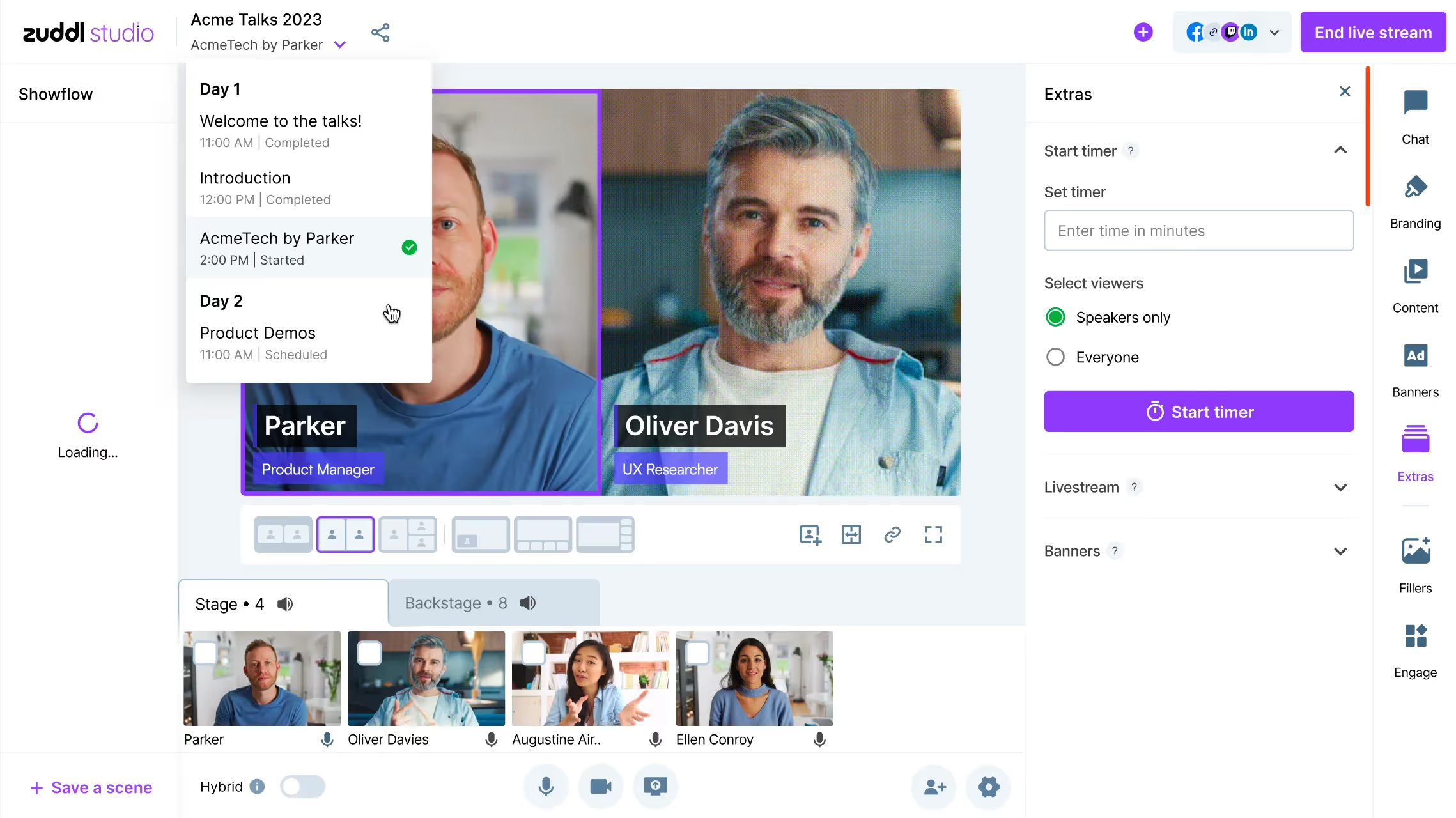

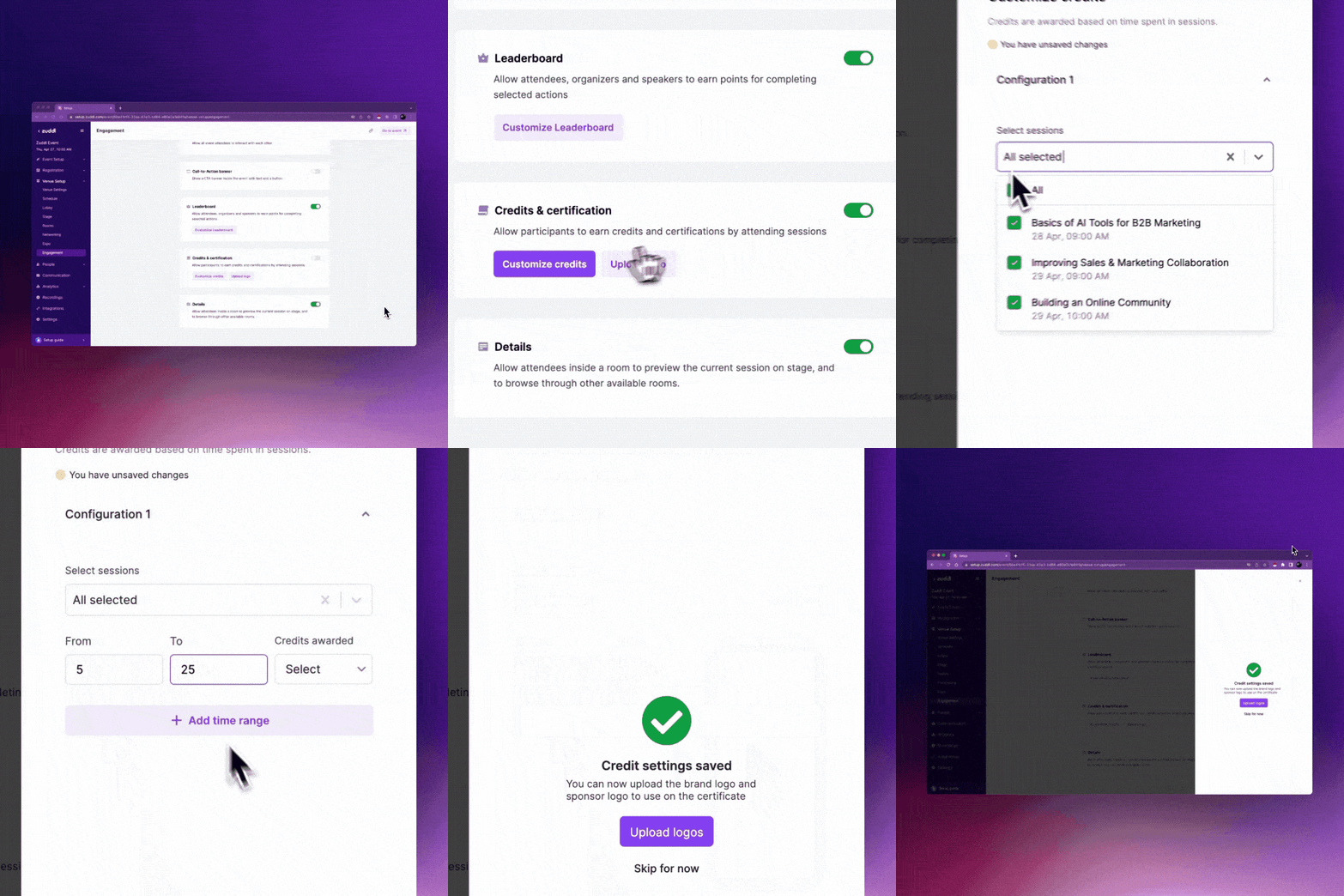
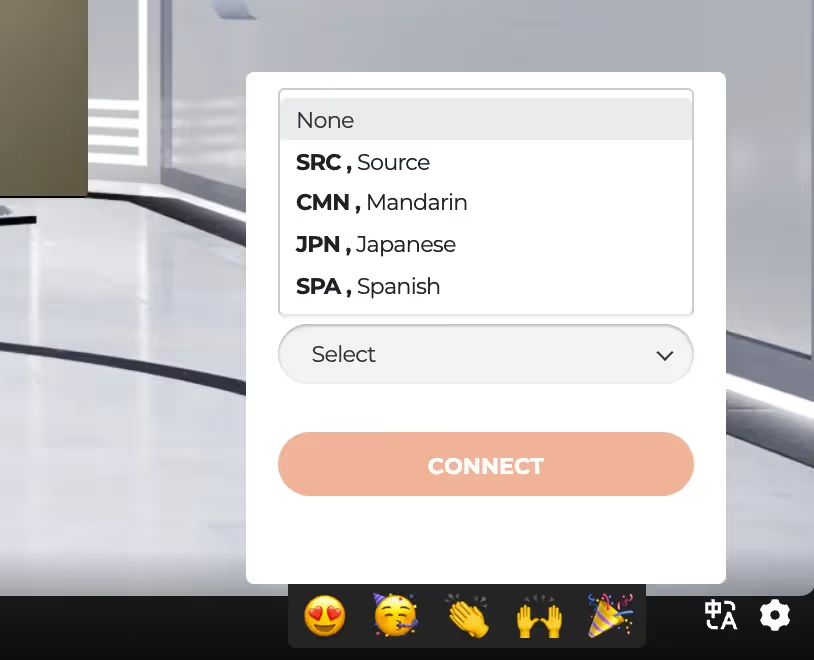
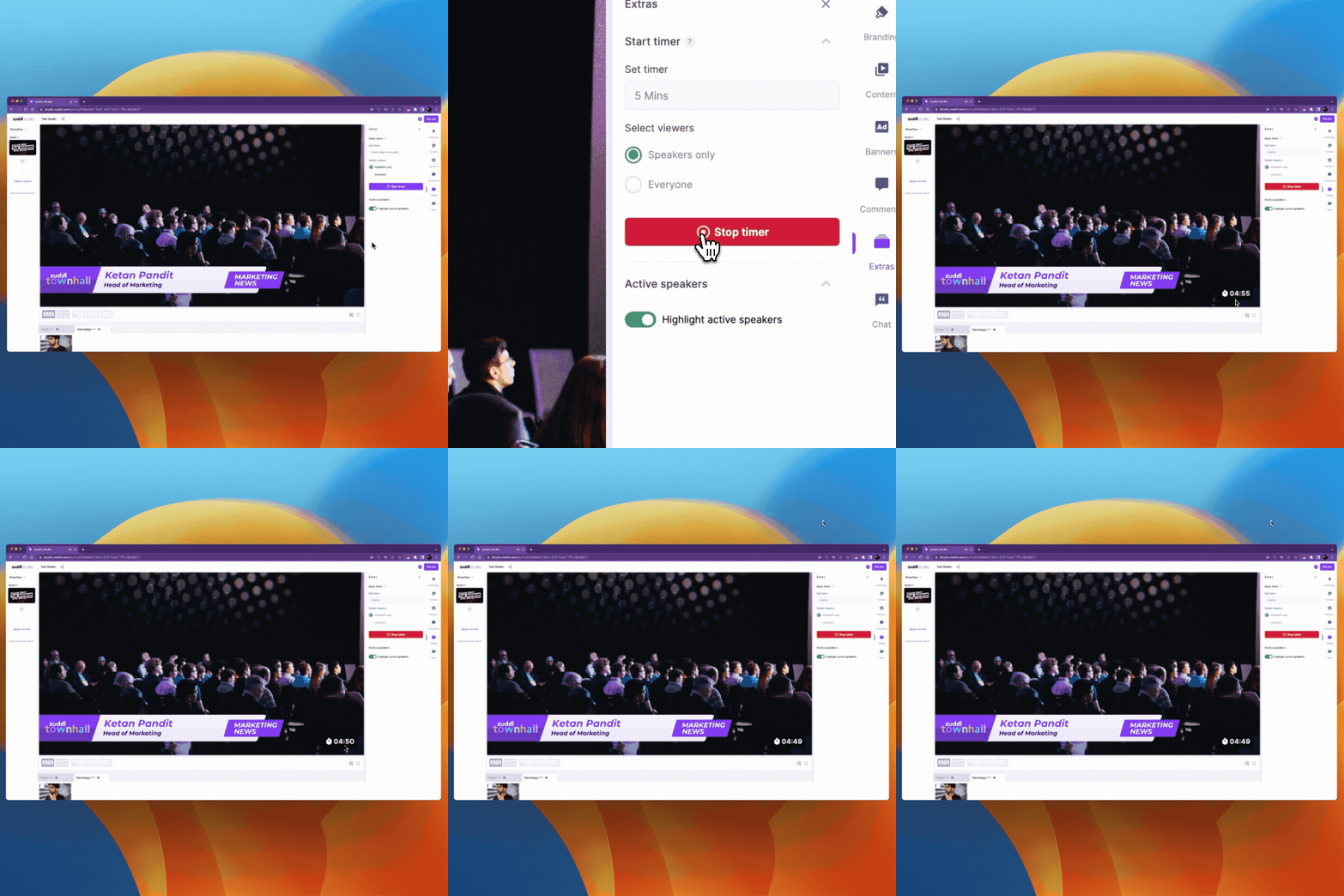
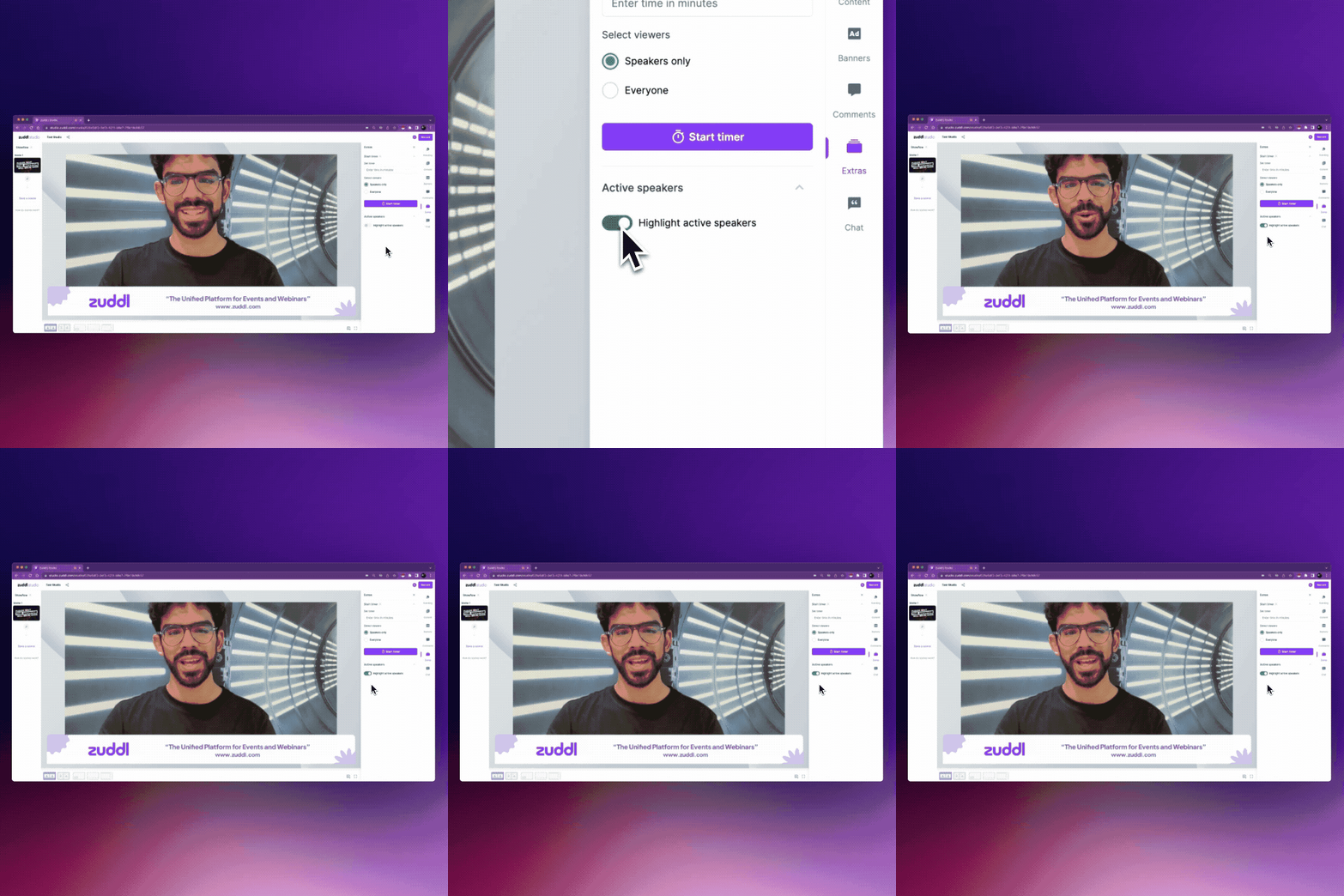
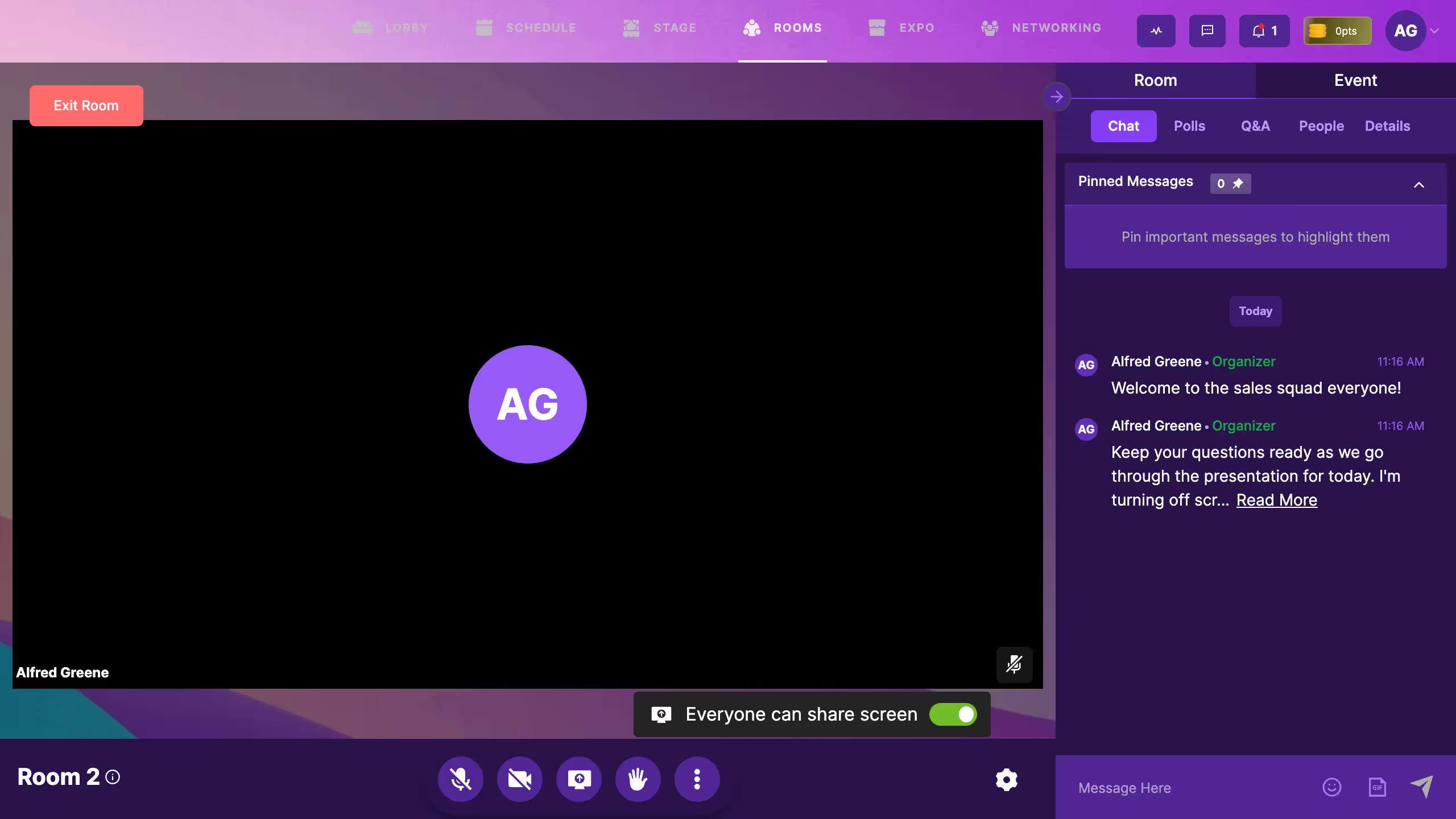


.avif)
.avif)
.avif)


.avif)


%20that%20suits%20your%20audience.avif)


